
Religious Minority Histories
Anti-Catholicism and the Fight Over American Identity
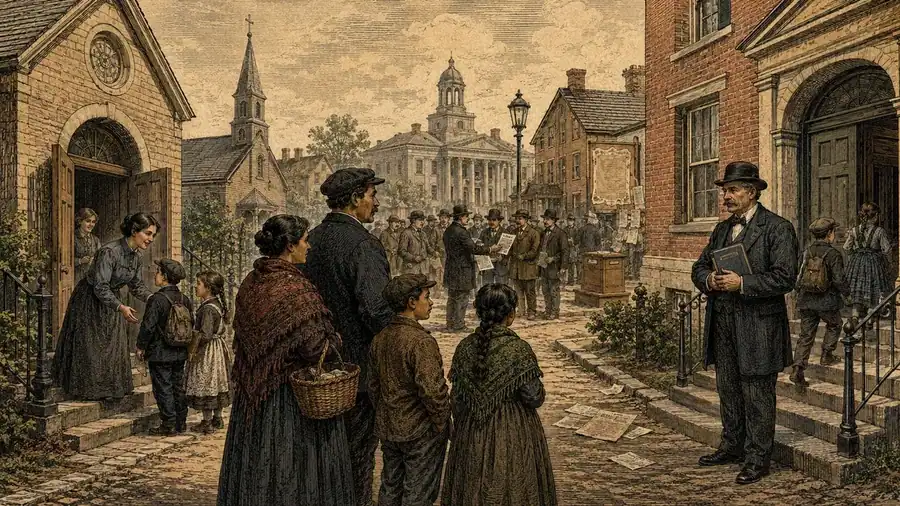
Anti-Catholicism shaped riots, political parties, public schools, immigration debates, and presidential elections. Its history shows how…
Read the storyIn-depth, accessible stories that explore the people, events, and ideas that shape our shared history.
Anti-Catholicism shaped riots, political parties, public schools, immigration debates, and presidential elections. Its history shows how…
Read the story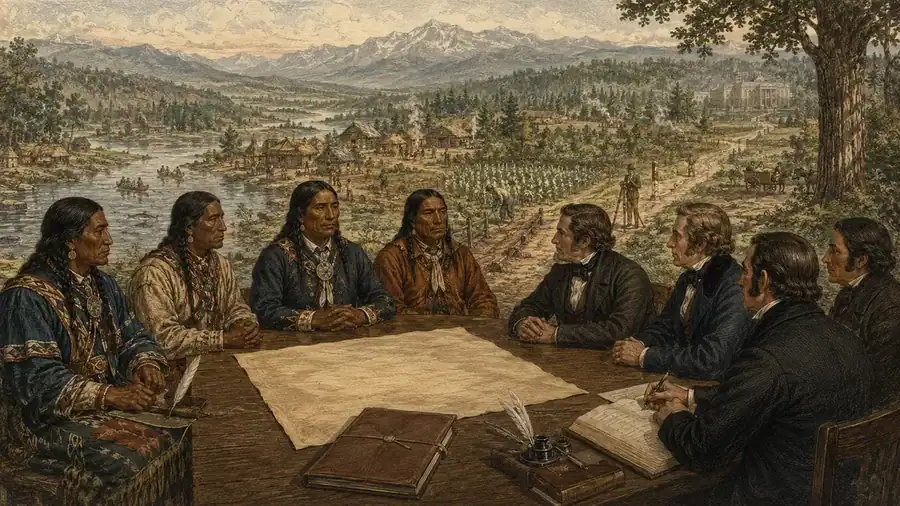
Treaties helped create the modern United States, but they also recognized Native Nations as governments with land, authority, and retained rights.…
Read the story
During the Cold War, the federal government treated actual or suspected homosexuality as a national-security risk. The Lavender Scare shows how…
Read the story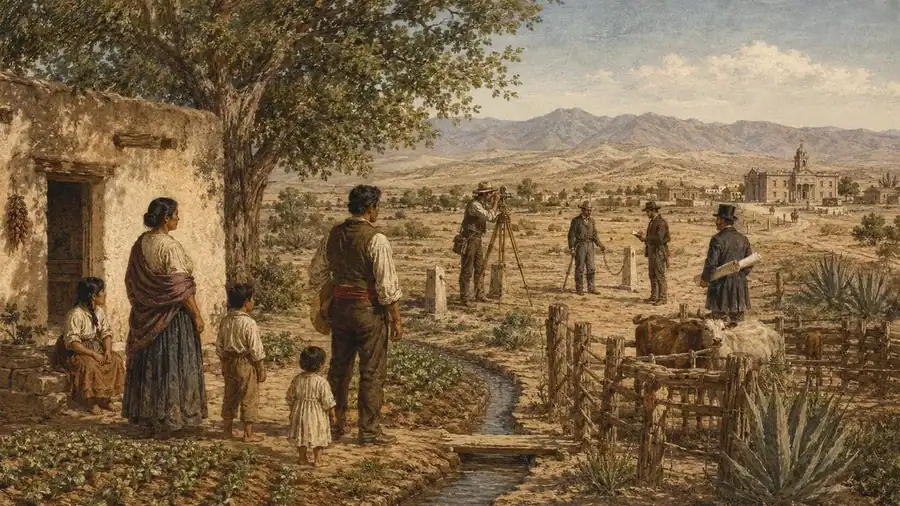
The Treaty of Guadalupe Hidalgo did more than redraw a border. It changed the citizenship, property rights, and legal world of Mexican communities…
Read the story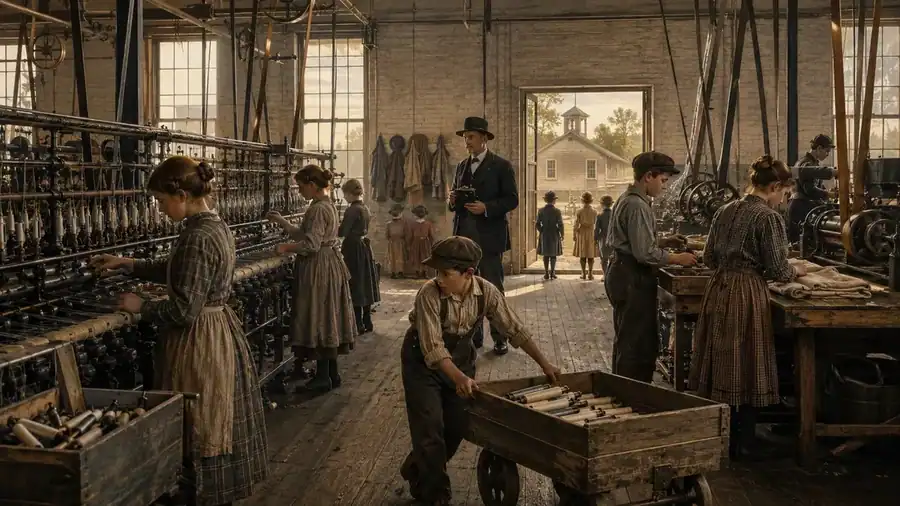
Child labor reform was a fight over more than factory safety. It asked who controlled children’s time, whether poor families could survive without…
Read the story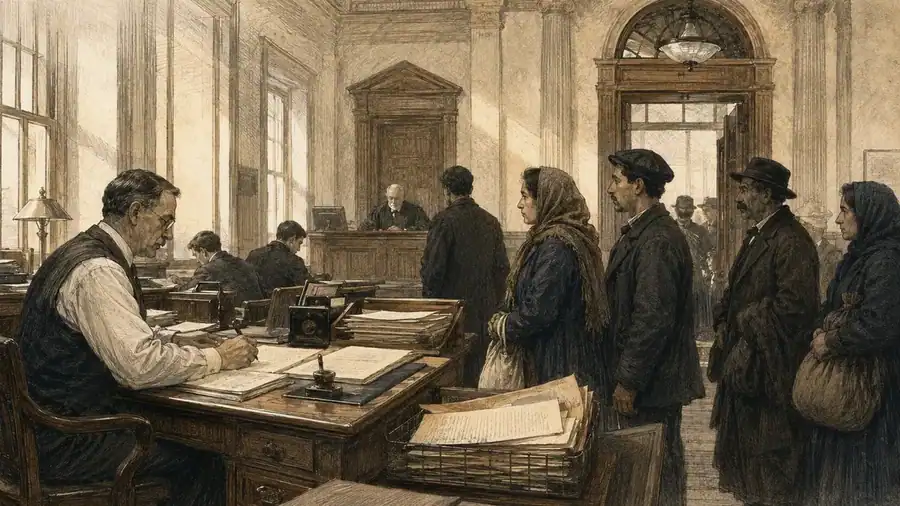
For much of U.S. history, naturalized citizenship was tied to race. This article explains how the law made whiteness a gatekeeping category for…
Read the story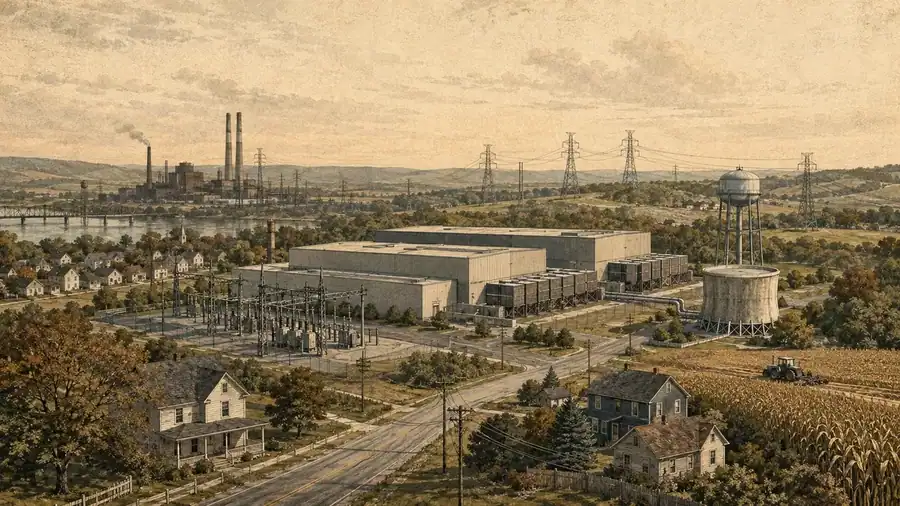
AI may feel weightless, but it belongs to a long history of American technologies whose physical costs were hidden behind promises of progress.…
Read the story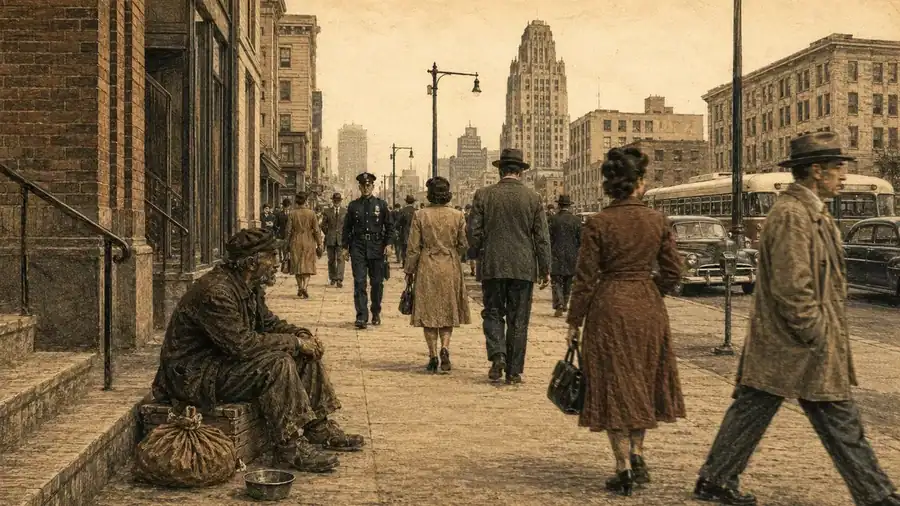
Ugly laws used local ordinances to push visibly disabled, poor, disfigured, or begging people out of public view. This article explains how those…
Read the story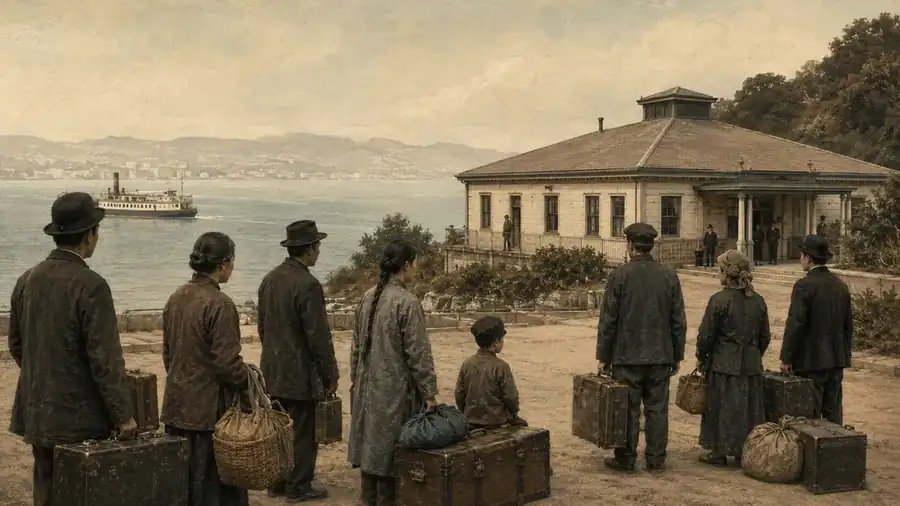
Angel Island was the other gate to America: a West Coast immigration station where many Asian immigrants encountered detention, interrogation, and…
Read the story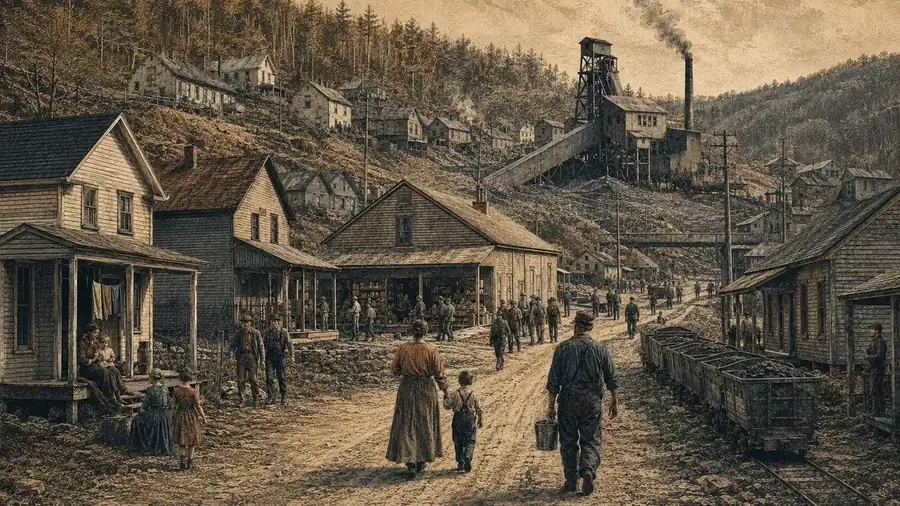
Company towns made work into an entire system of dependence. In many coal, lumber, mill, and industrial communities, employers controlled not only…
Read the story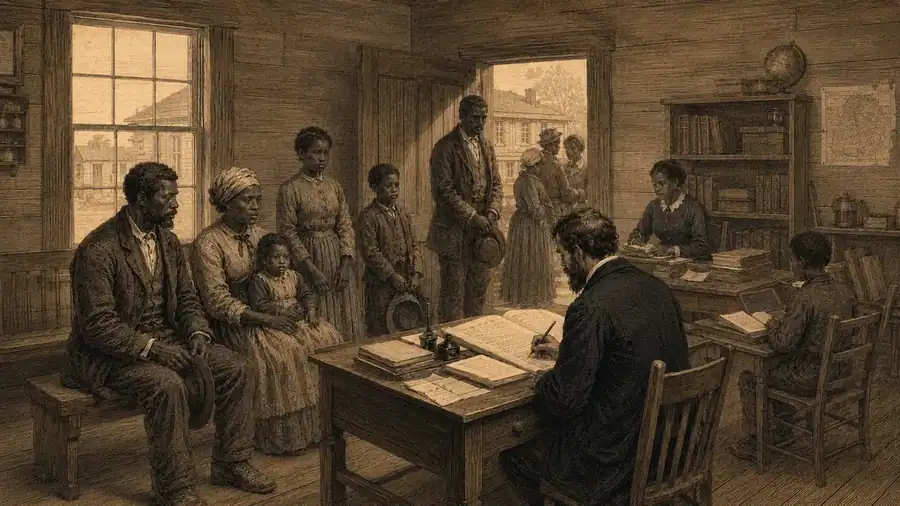
After the Civil War, the Freedmen’s Bureau became one of the federal government’s first major attempts to help formerly enslaved people build…
Read the story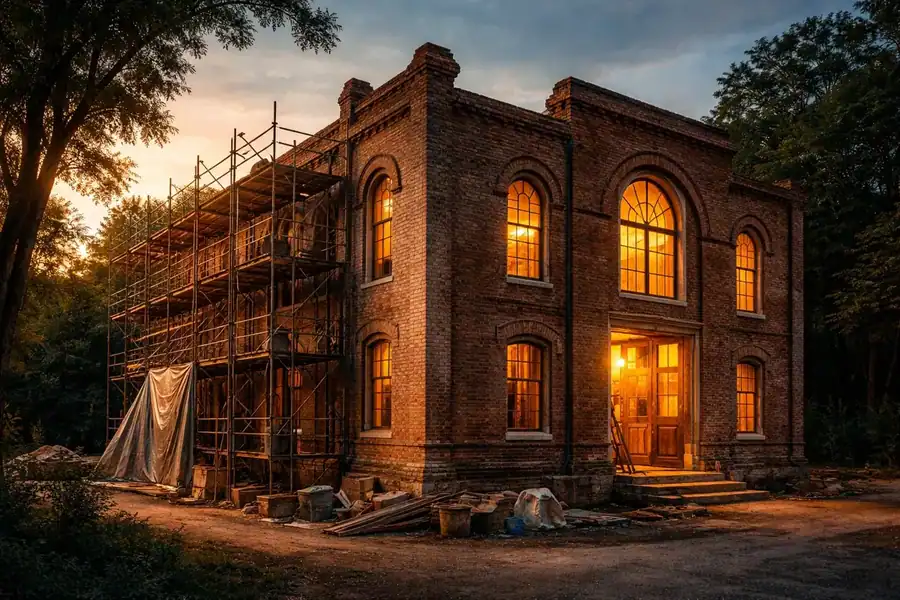
Historic site restoration preserves more than buildings. It preserves memory, credibility, and belonging. This article explores how restoring…
Read the story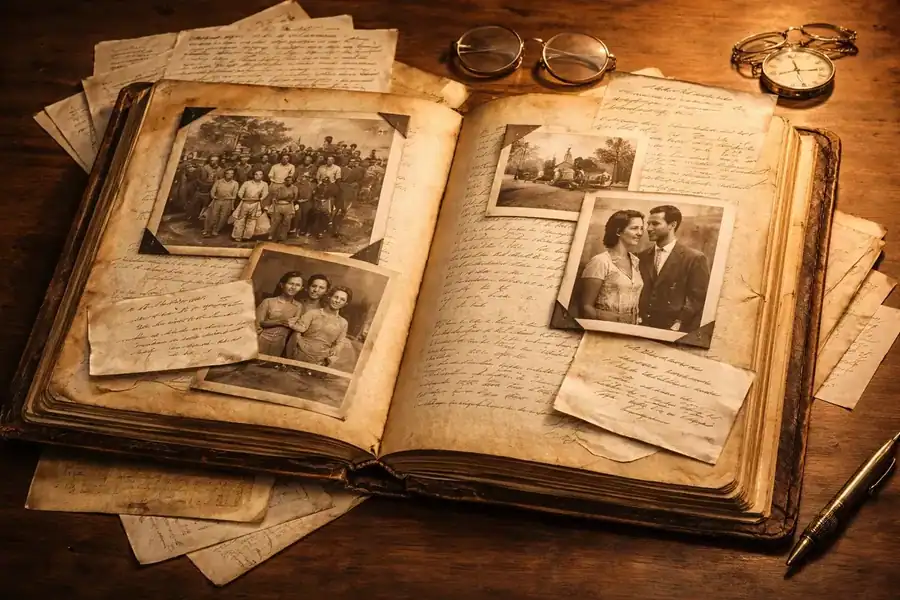
Across U.S. history, families have preserved truth when official records were lost, destroyed, or never created. This article explores how family…
Read the story
Teaching hard history is often framed as a curriculum dispute, but it also shapes community health. This article explains how truthful historical…
Read the story
Collective trauma is not merely an individual response to adversity. It is a social and psychological process that affects communities across…
Read the story
Historical silence has shaped how communities are remembered, understood, and treated in the United States. This article examines how silence is…
Read the story
Fear has repeatedly been used in U.S. history to justify restrictive laws, expanded enforcement, and unequal treatment. This article examines how…
Read the story
Stereotypes endure when systems keep reproducing the outcomes that make them feel true. This article traces how stereotyping moved from social…
Read the story
A historical look at how myths were constructed to justify unequal systems, how institutions repeated them, and why modern platforms help them…
Read the story
Why do stereotypes survive even when the data disproves them? This article explores the cognitive, social, and media systems that keep false group…
Read the story
American policy has often been shaped by two fears: fear of losing power and fear of disorder. Understanding the difference explains why rules…
Read the story
Black genre-defying music reveals how artists have resisted fixed categories, using sound to express complex identities beyond industry labels.
Read the story
Sampling functions as cultural memory in sound, preserving lineage, context, and history through reuse, reference, and reinterpretation across…
Read the story
Hip-hop emerged as a form of public testimony, documenting urban life, policy impact, and lived experience long before many of those realities…
Read the story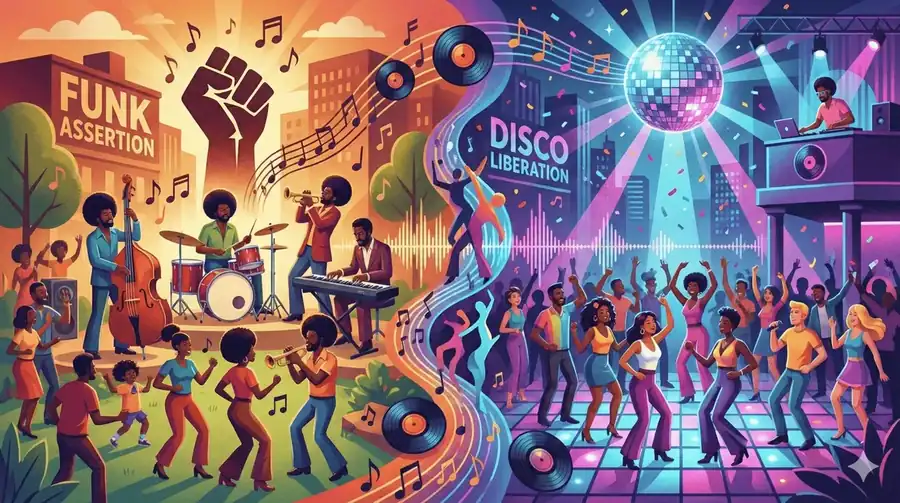
Funk and disco emerged during the 1970s as genres of assertion and collective presence. Rooted in Black, Latino, and LGBTQ+ communities, they…
Read the story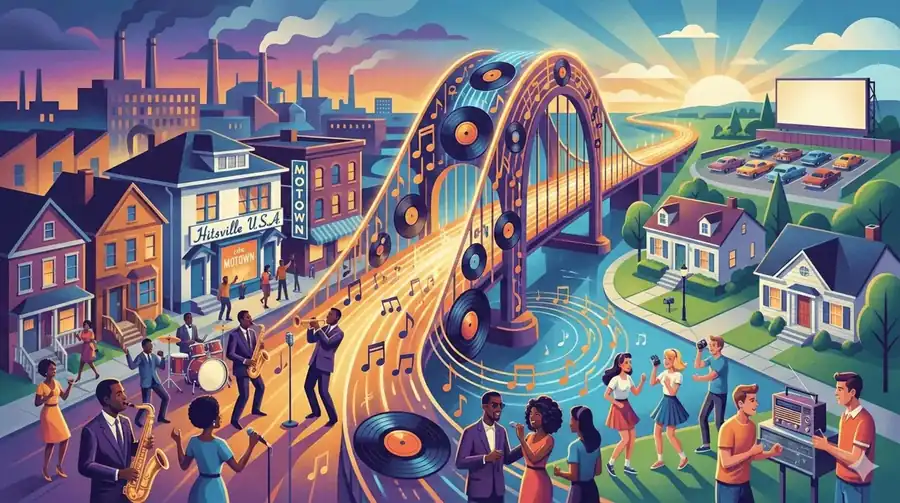
Motown created shared cultural experiences across racial divides during segregation, functioning as a bridge between separate worlds while…
Read the story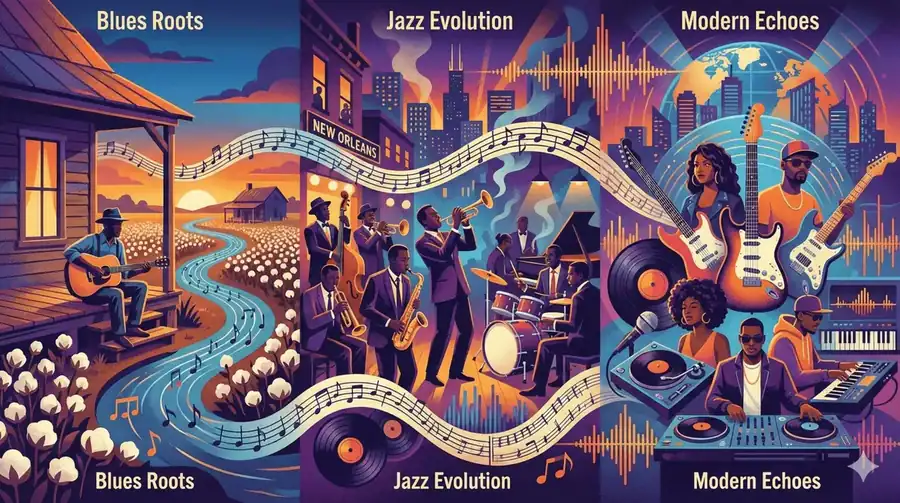
This article traces how the blues led to jazz by combining expressive traditions in African-American communities, and how jazz’s improvisational…
Read the story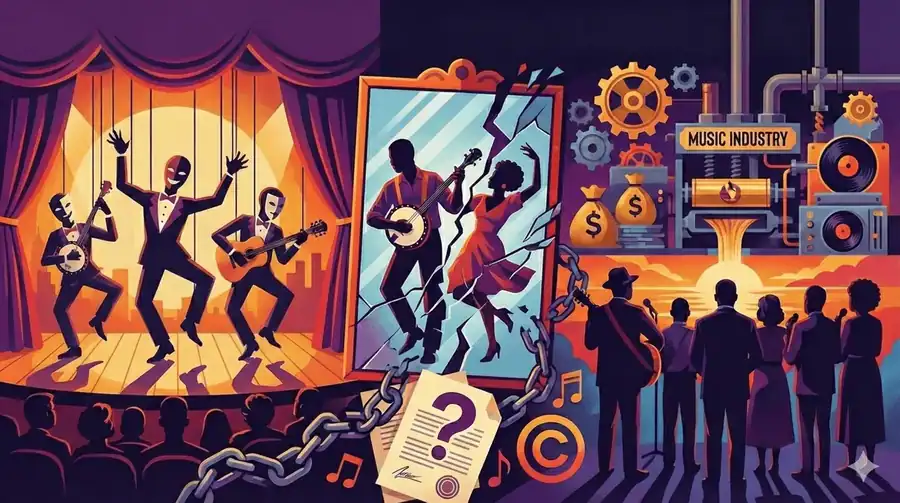
Minstrelsy appropriated Black expressive forms and shaped entertainment industry structures, contributing to long-lasting debates over artistic…
Read the story
Across generations, Black music preserved lived experience and documented the struggle for freedom when formal records were absent or exclusionary.
Read the story
Spirituals functioned as one of America’s earliest folk traditions—shared orally, shaped collectively, and rooted in survival under constraint.
Read the story
Black music shaped American culture through systems that often separated influence from ownership. This article traces how sound formed, moved,…
Read the story
Nations remember selectively. This article explores how psychology shapes national myths—and why forgetting matters as much as remembering.
Read the story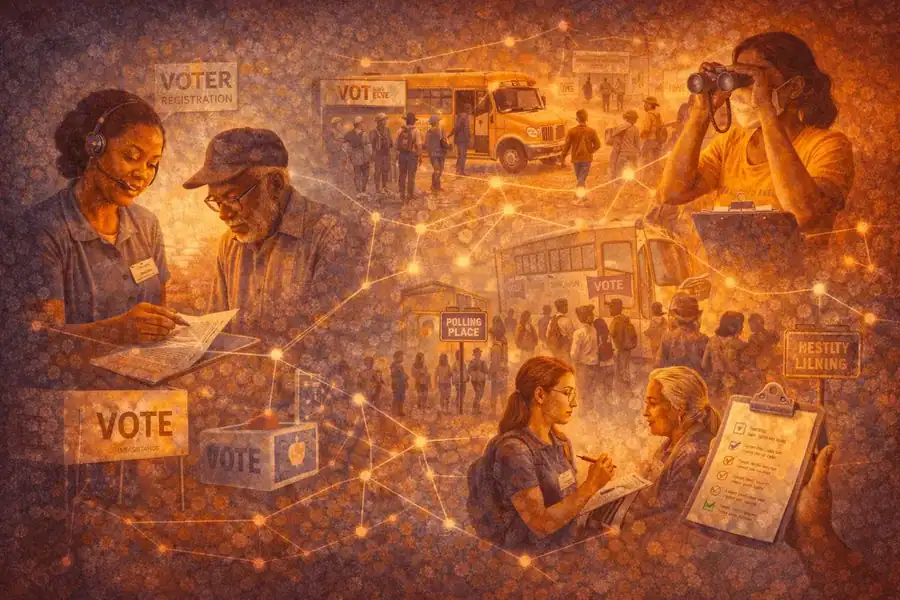
Local organizers play a critical role in protecting voter access by reducing barriers and responding to challenges where elections actually occur.
Read the story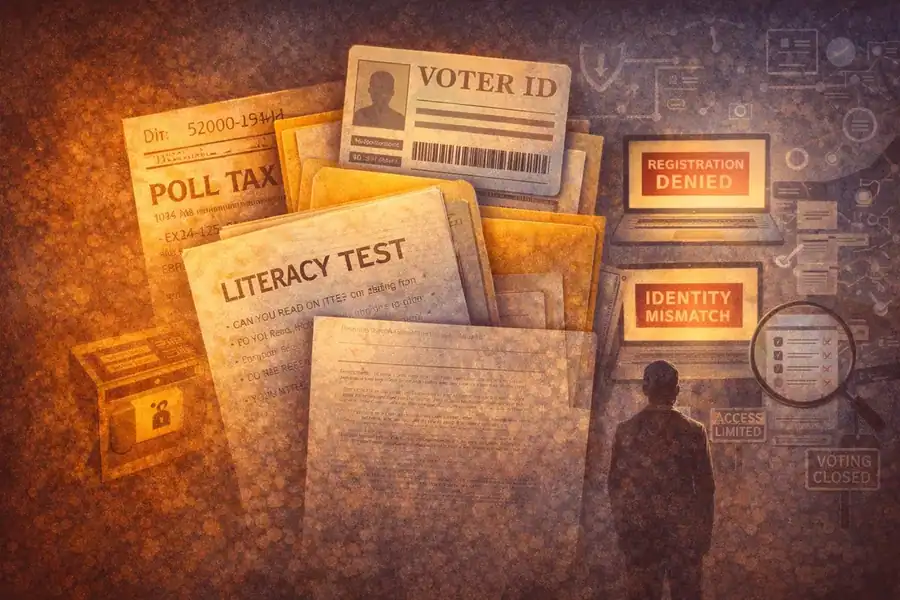
Modern voting restrictions combine old mechanisms with new tools. This article explains what has changed, what hasn’t, and why it matters.
Read the story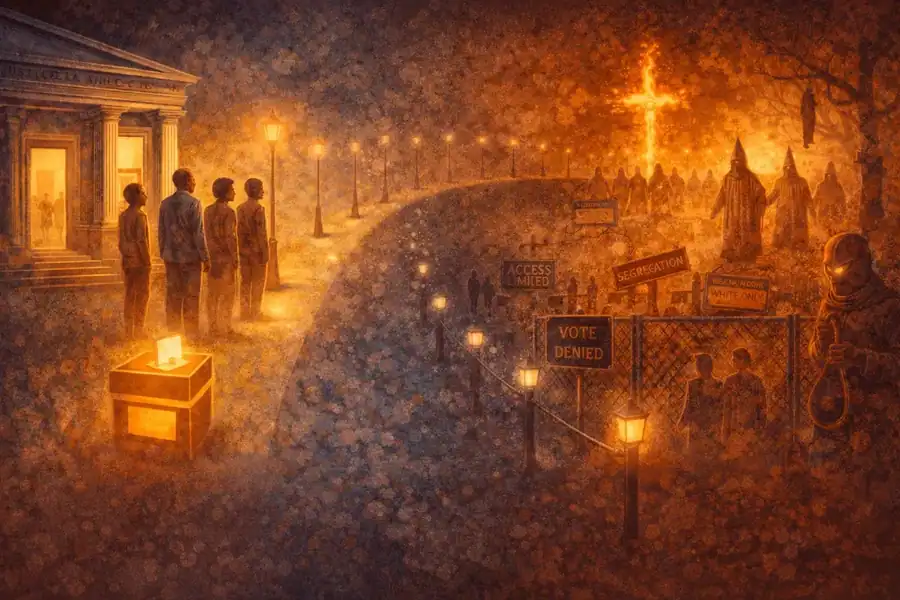
After Reconstruction, American democracy narrowed by design. The Nadir of race relations shows how rights can exist without enforcement.
Read the story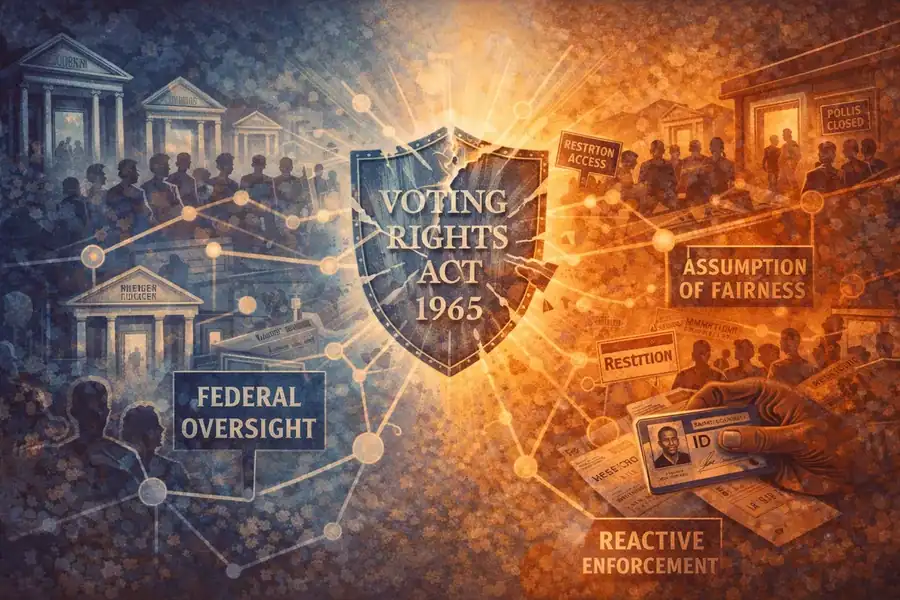
The Voting Rights Act enforced access where rights alone fell short. This article explains why it was needed—and what changed when protections…
Read the story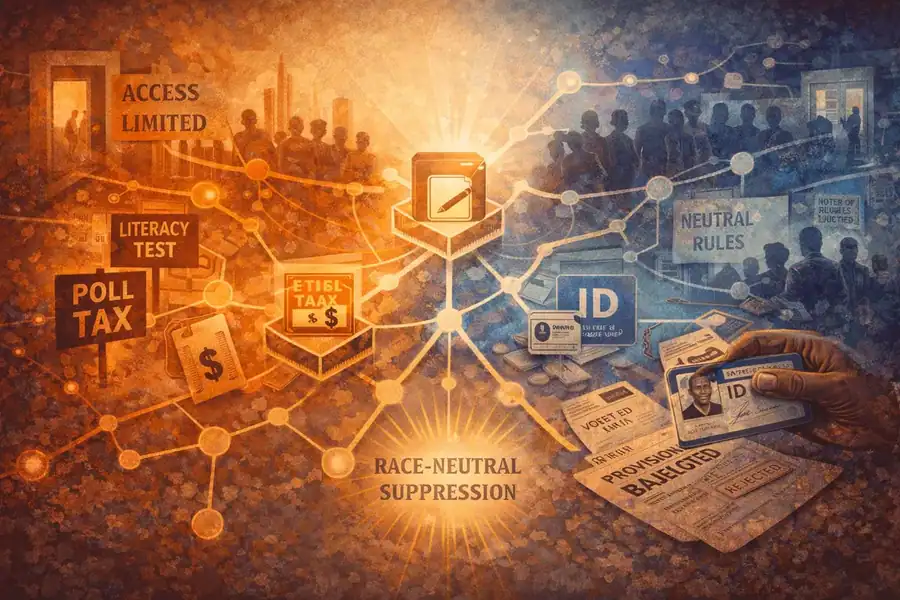
Literacy tests and poll taxes restricted voting without naming race. This article explains how “neutral” rules produced unequal participation.
Read the story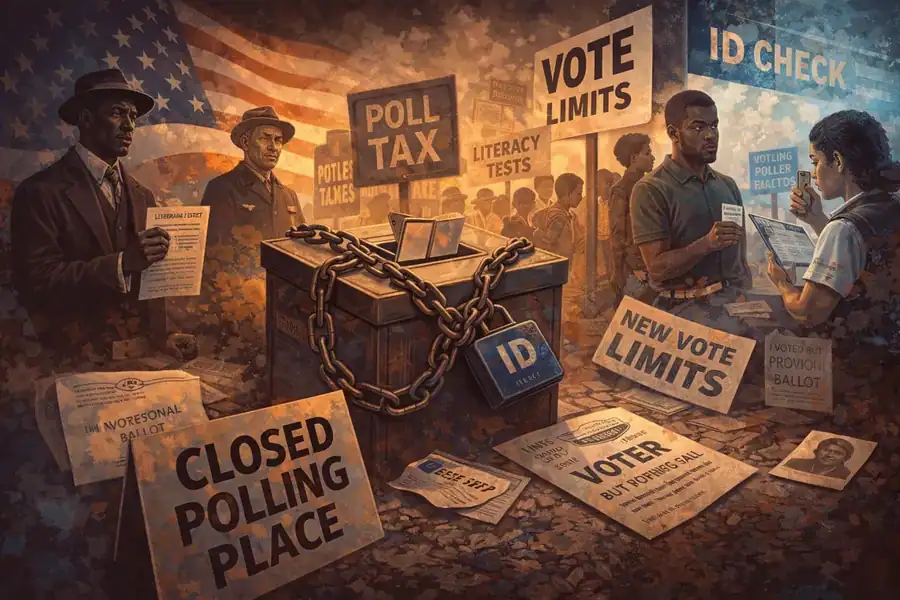
Voting rights have expanded over time—but restriction has adapted with each generation. This article explores how barriers persist without…
Read the story
American democracy expanded through struggle, not consensus. Black Americans have been central to widening participation and redefining who…
Read the story
When state violence occurs, communities often step in where institutions do not—providing care, memory, and meaning in the absence of accountability.
Read the story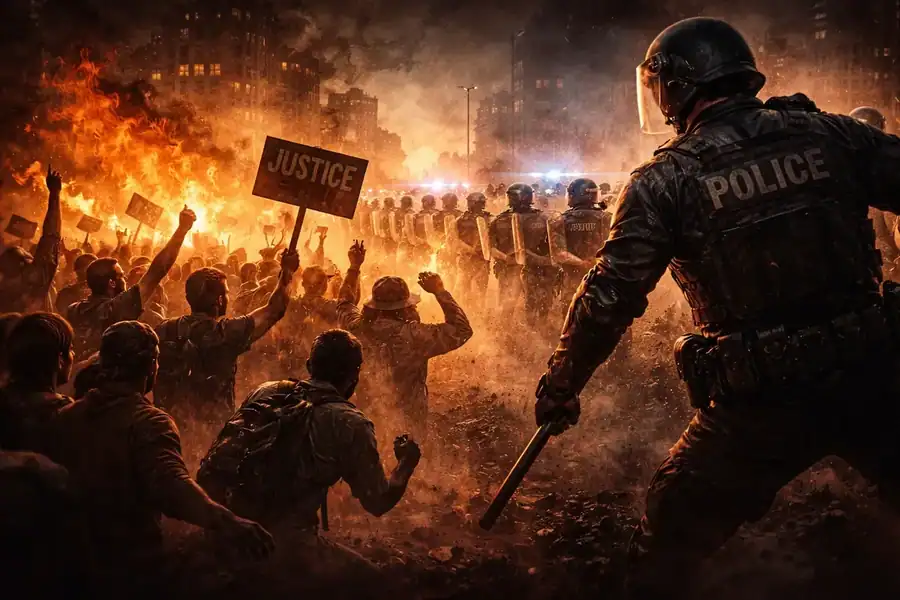
Protest movements are often labeled riots when they disrupt power, not when they lack purpose. This article explores how language shapes response…
Read the story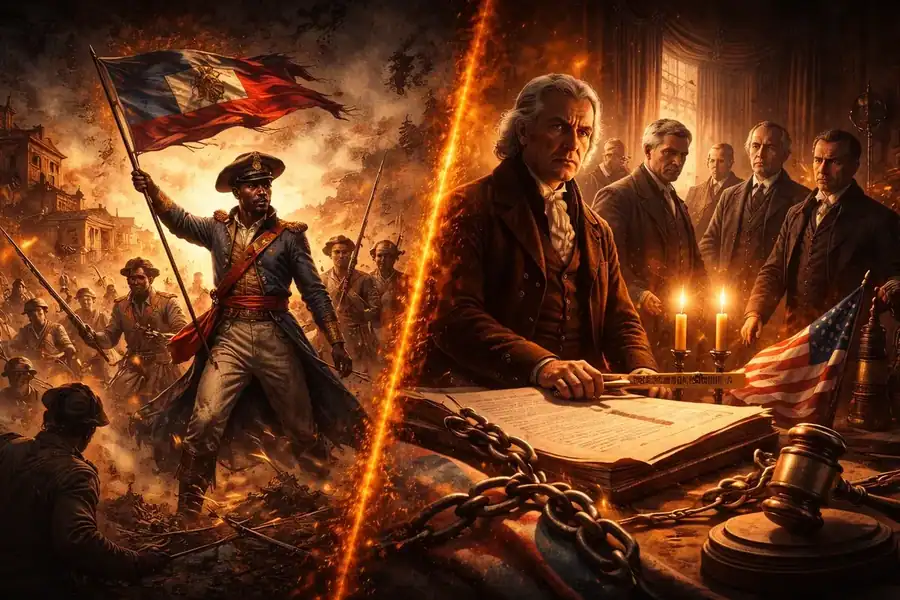
The Haitian Revolution succeeded—and its success reshaped American policy through fear, silence, and containment. This article explores how Black…
Read the story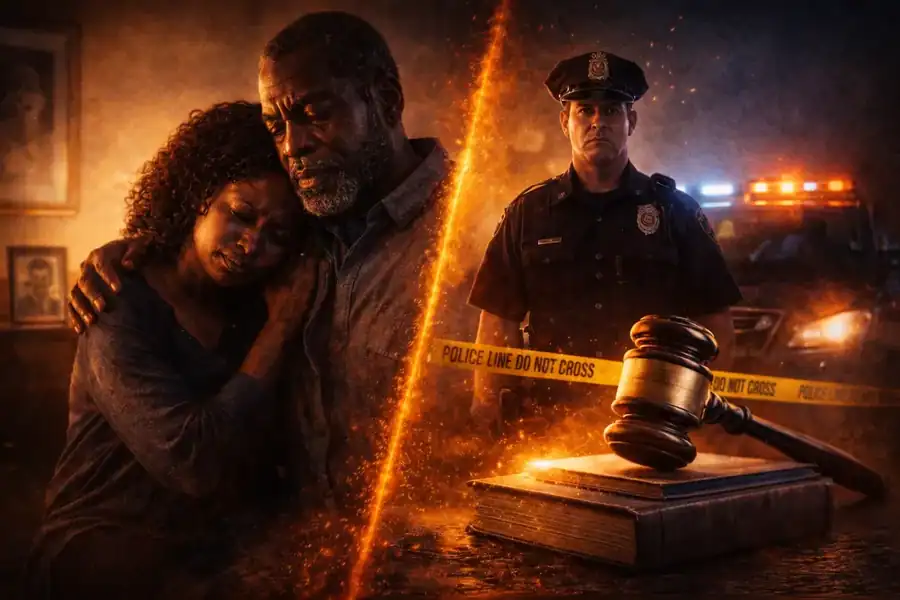
Qualified immunity can block civil lawsuits even when misconduct is plausible, by requiring plaintiffs to show the violated right was “clearly…
Read the story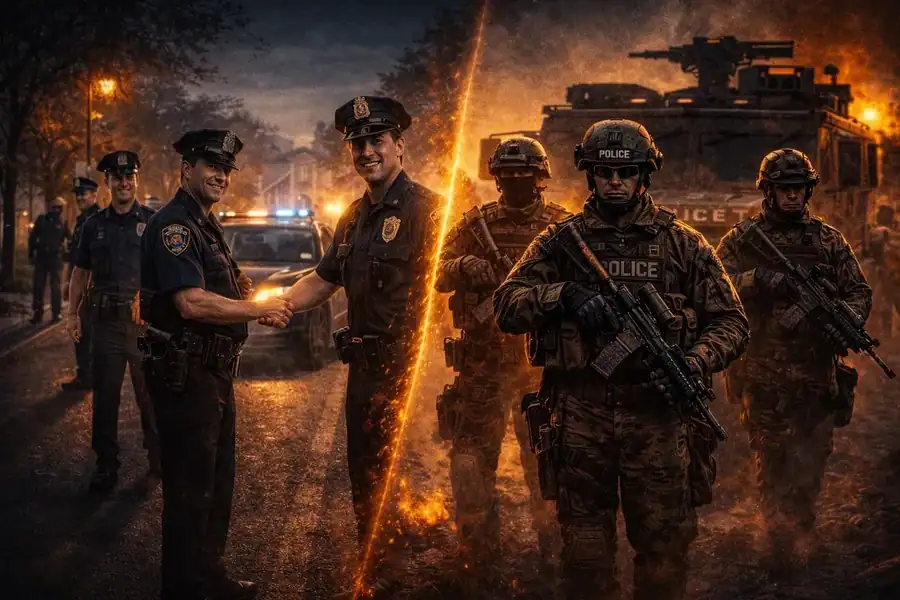
Police weren’t always armed like soldiers. Militarization grew through policy choices, funding incentives, and fear—and it reshaped everyday policing.
Read the story
No-knock raids weren’t designed as routine—but over time, they became normalized. Their history helps explain why forced entry so often turns deadly.
Read the story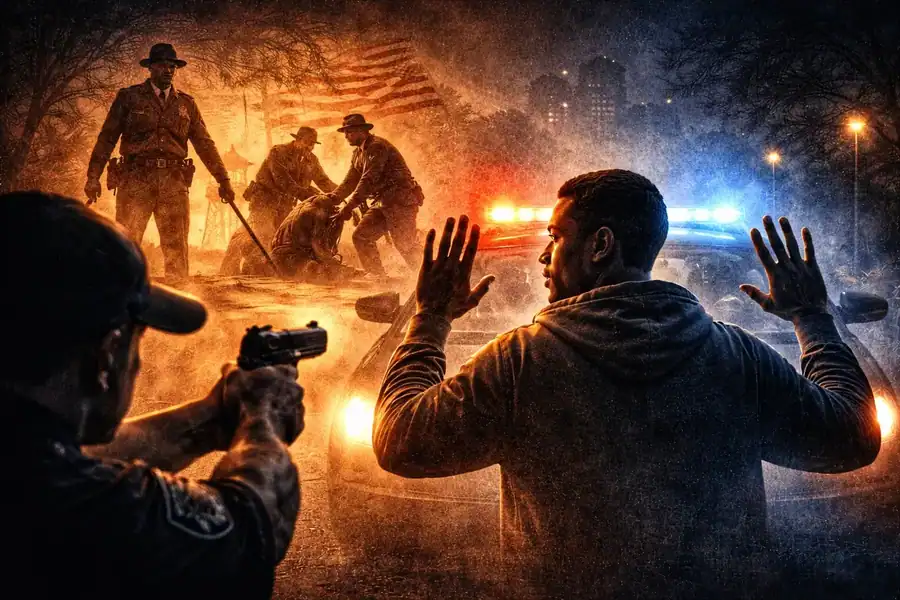
Police encounters don’t turn deadly at random. History, exposure, and enforcement patterns shape who faces risk—and why disparities persist.
Read the story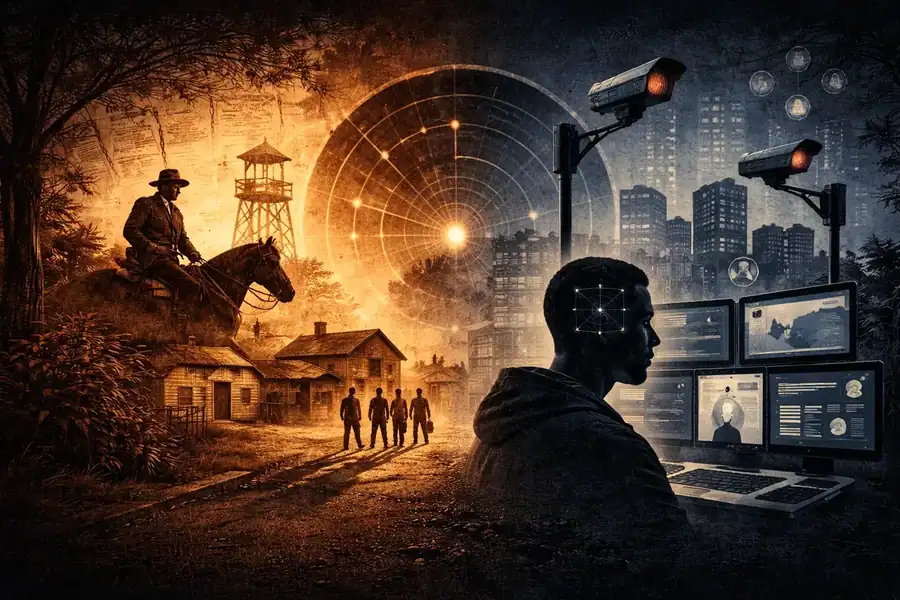
Surveillance in the U.S. didn’t begin with technology. From slave patrols to digital monitoring, systems of oversight evolved unevenly—and their…
Read the story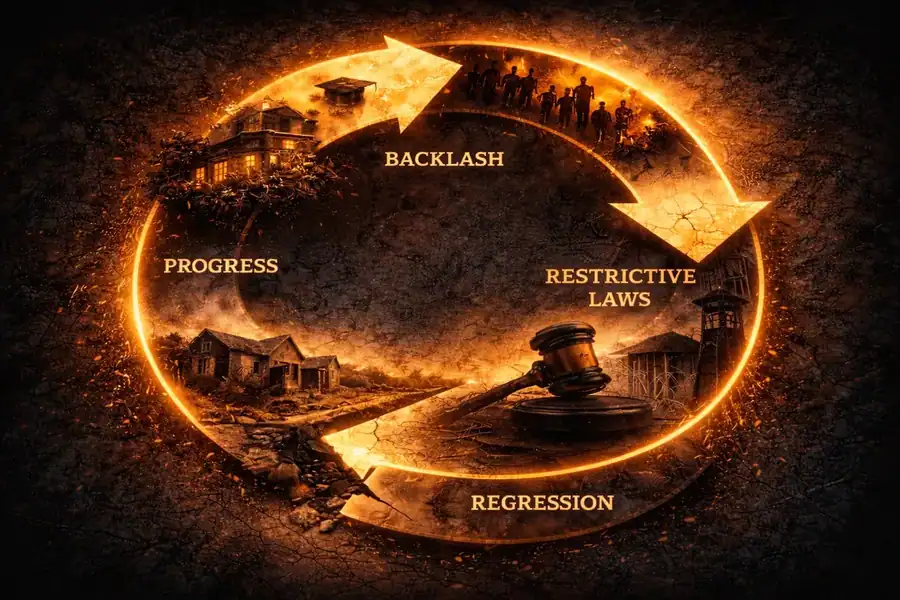
A look at how Black progress has repeatedly been followed by backlash and restrictive laws—and why the cycle continues across generations.
Read the story
An exploration of how fear — not just crime — shaped policing policy, enforcement priorities, and surveillance across American history.
Read the story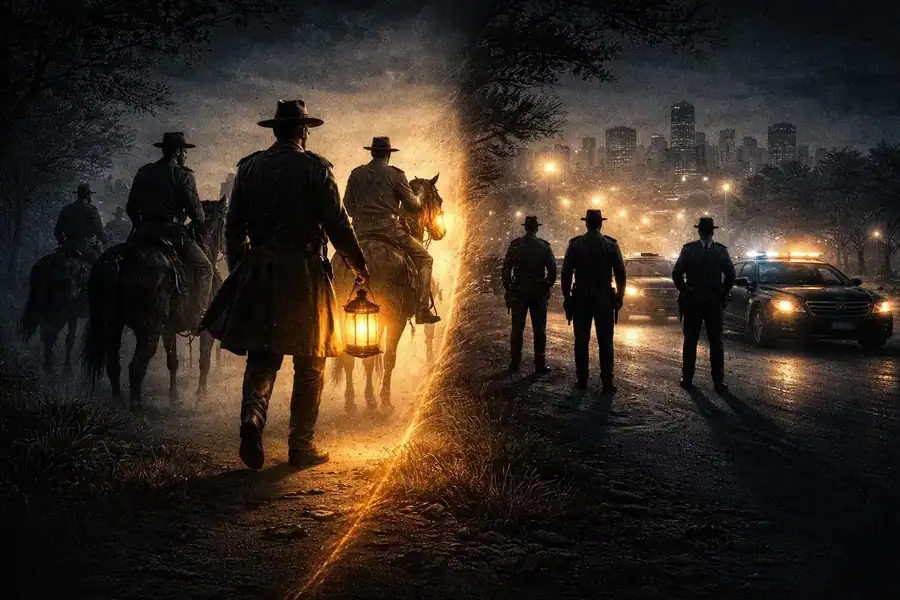
An exploration of how slave patrols shaped early American law enforcement—and why their legacy still influences policing today.
Read the story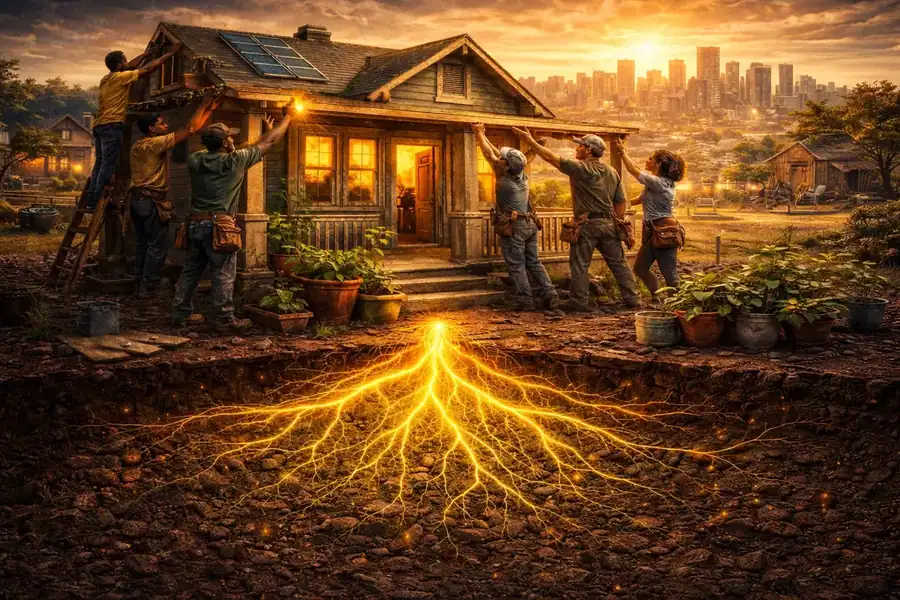
Examples of community restoration efforts that have measurably improved stability, wealth retention, and long-term outcomes in historically harmed…
Read the story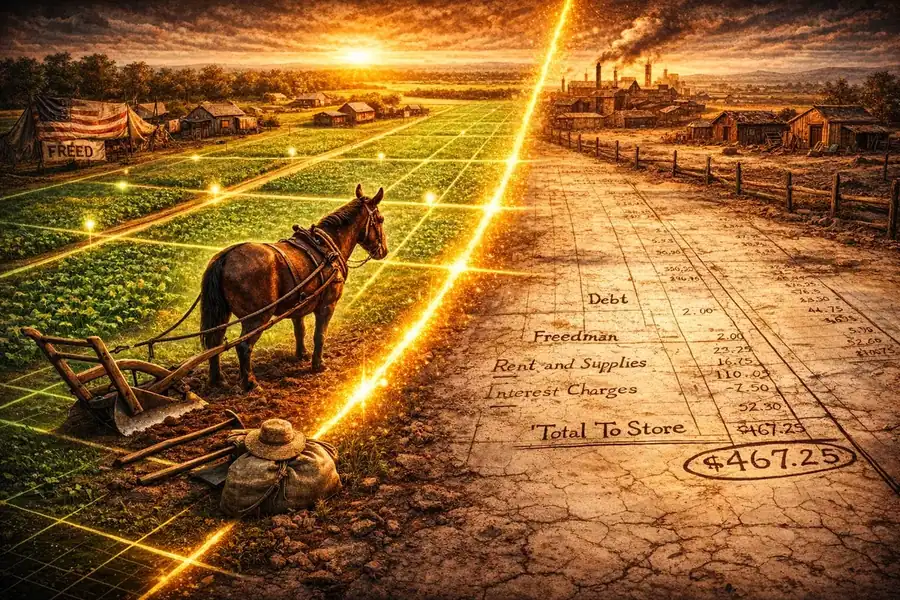
An economic explanation of what “40 acres and a mule” would have meant—and how land access could have reshaped wealth after emancipation.
Read the story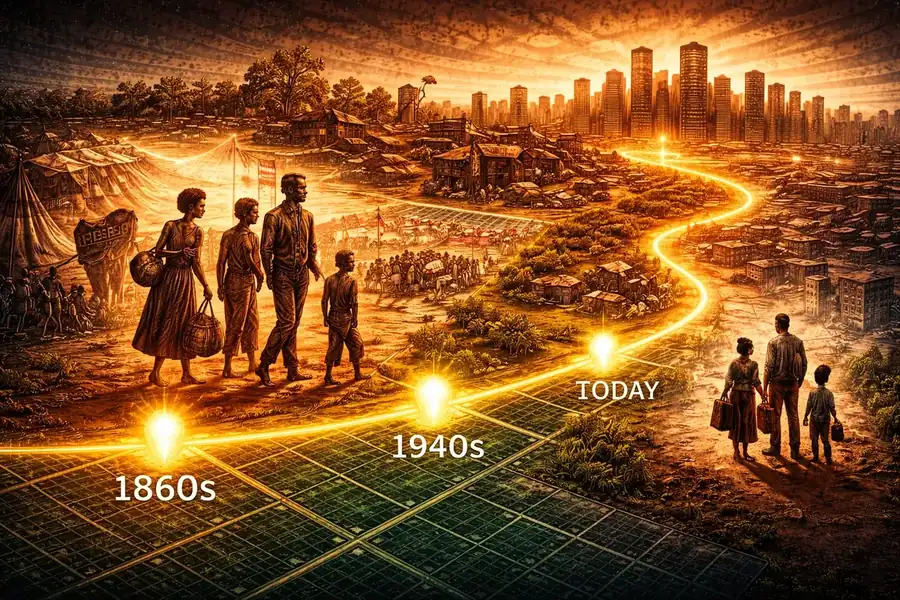
An overview of why reparations has been debated since emancipation—and why the question persists as inequality remains visible.
Read the story
An explanation of how redlining shaped housing, wealth, infrastructure, and opportunity—and why modern cities still reflect those designs.
Read the story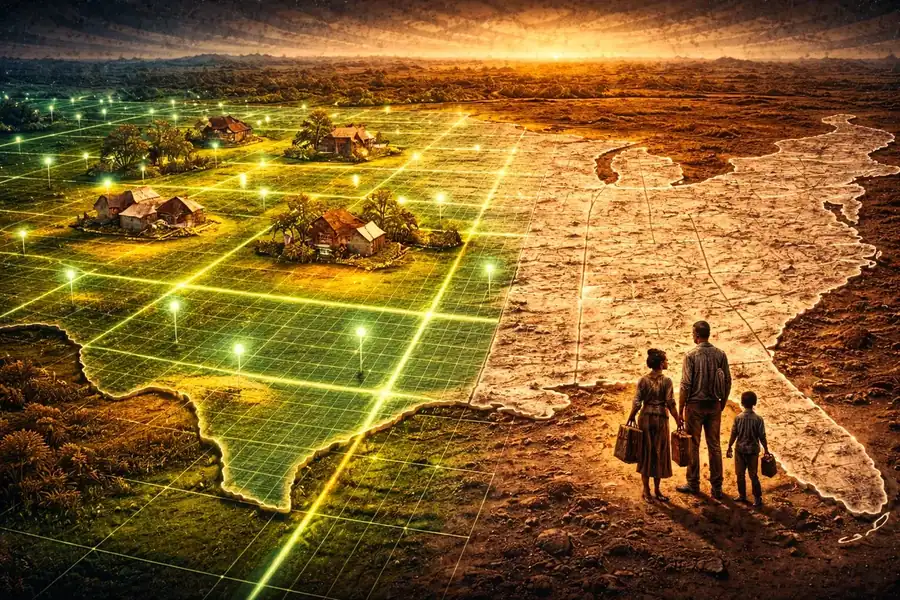
An explanation of how the Homestead Act helped build wealth for millions while Black families were largely excluded—shaping land ownership and…
Read the story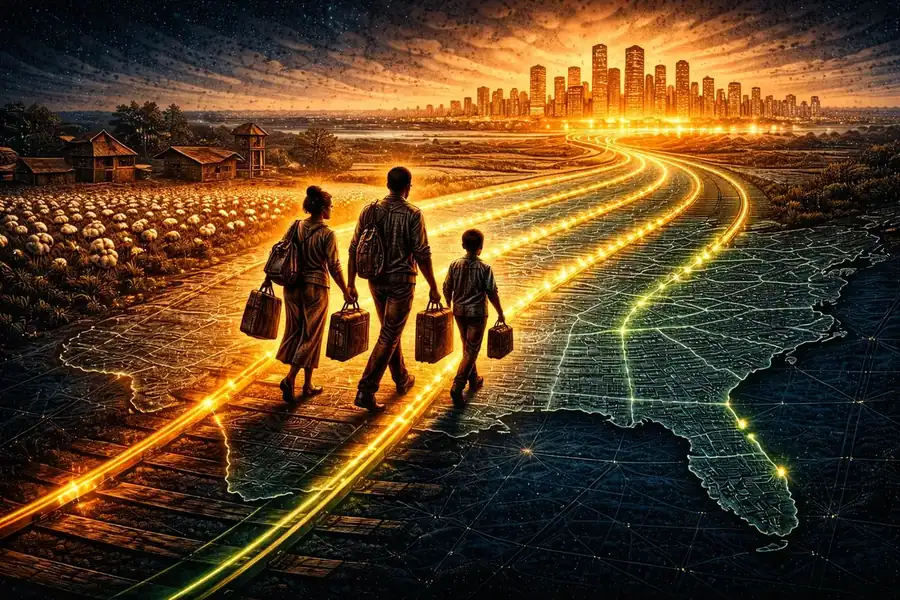
An explanation of the Great Migration as a strategic economic response to debt, violence, and blocked opportunity—and how migration reshaped…
Read the story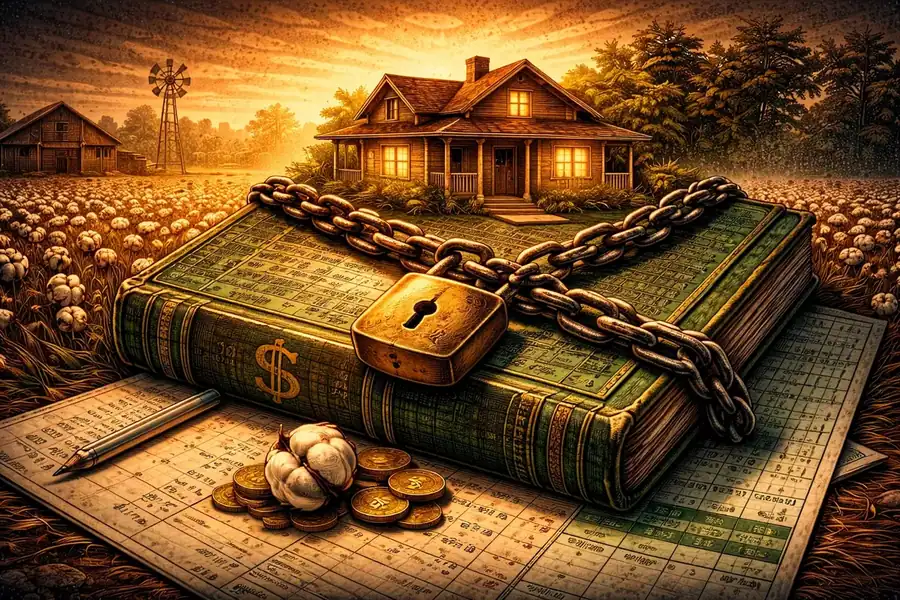
An explanation of how sharecropping replaced slavery as a system of labor control—using debt, land access, and credit to preserve inequality long…
Read the story
A look at how eminent domain has removed working-class and marginalized communities in the name of progress—and how land loss reshaped wealth,…
Read the story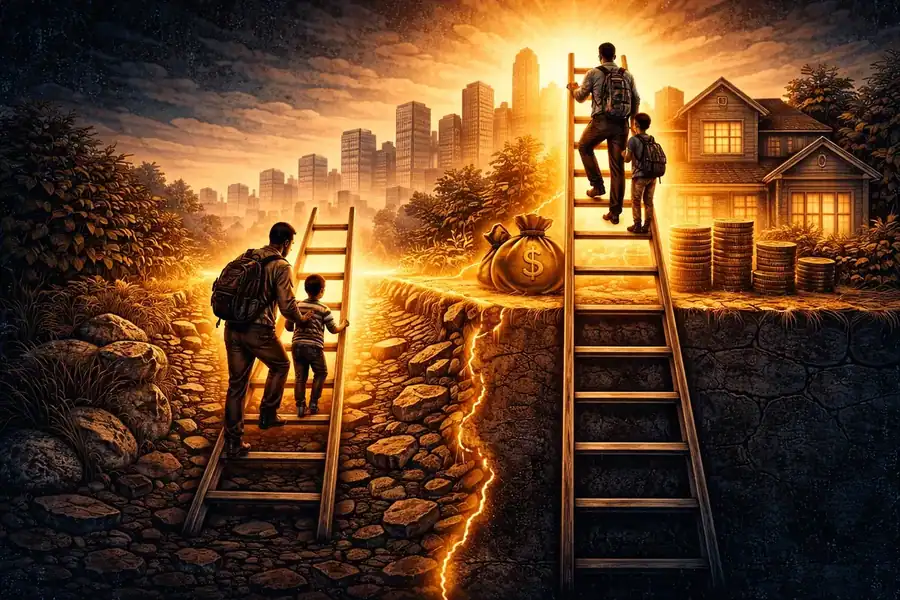
An explanation of how policy, access, and historical exclusion created the racial wealth gap—and why individual choices alone can’t explain…
Read the story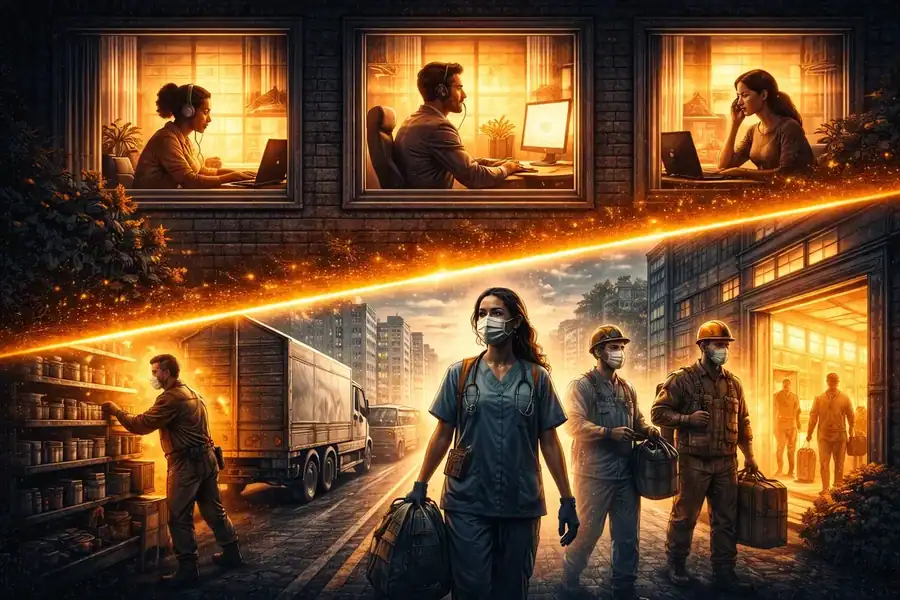
Covid-19 didn’t just disrupt work—it revealed how working-class America carries economic risk through low protections, high exposure jobs, and…
Read the story
An explanation of how corporate tax incentives affect local budgets, public services, and community wealth — and why the costs often fall on…
Read the story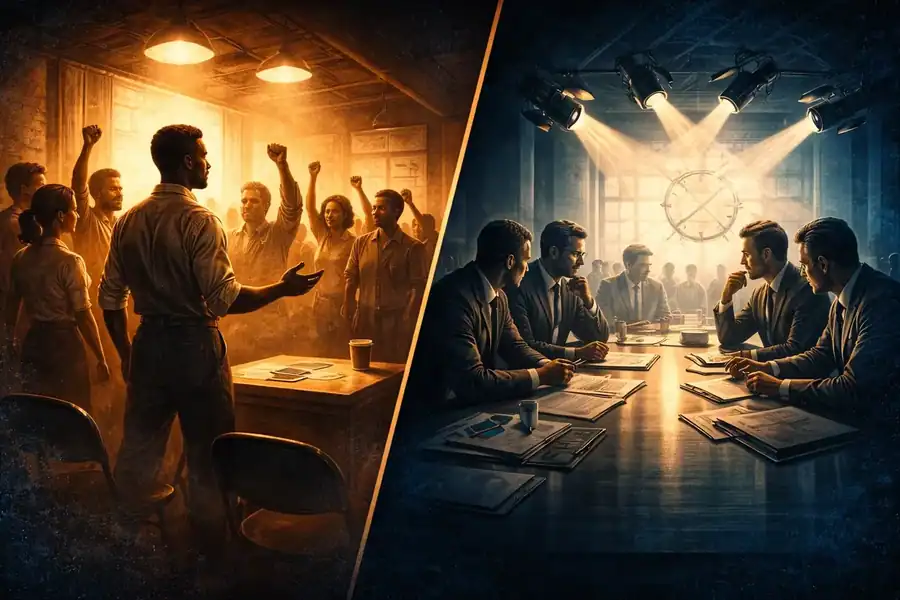
An exploration of why some industries still resist unions, how employer strategies evolved over time, and what workers risk when they try to…
Read the story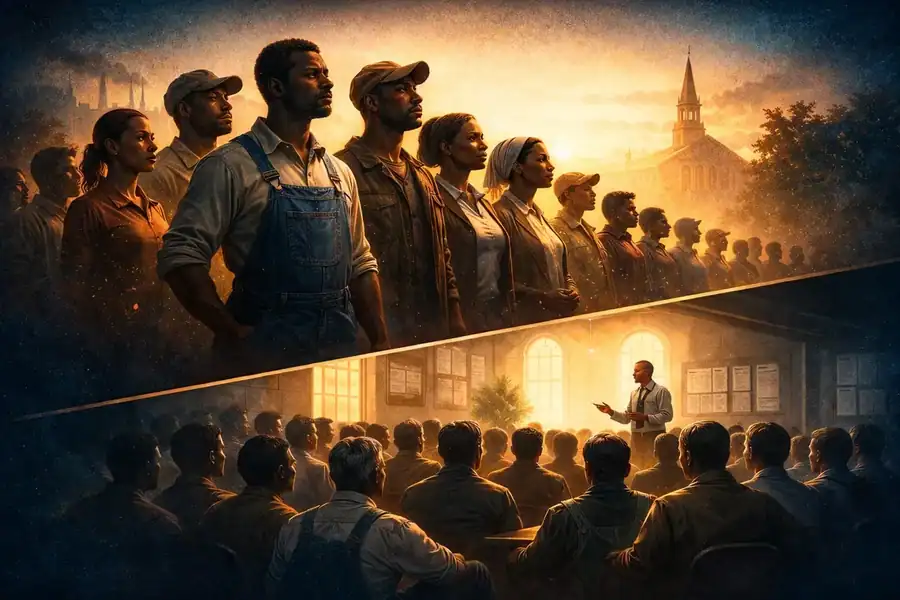
An exploration of how Black communities organized labor long before formal unions—through mutual aid, community networks, and collective…
Read the story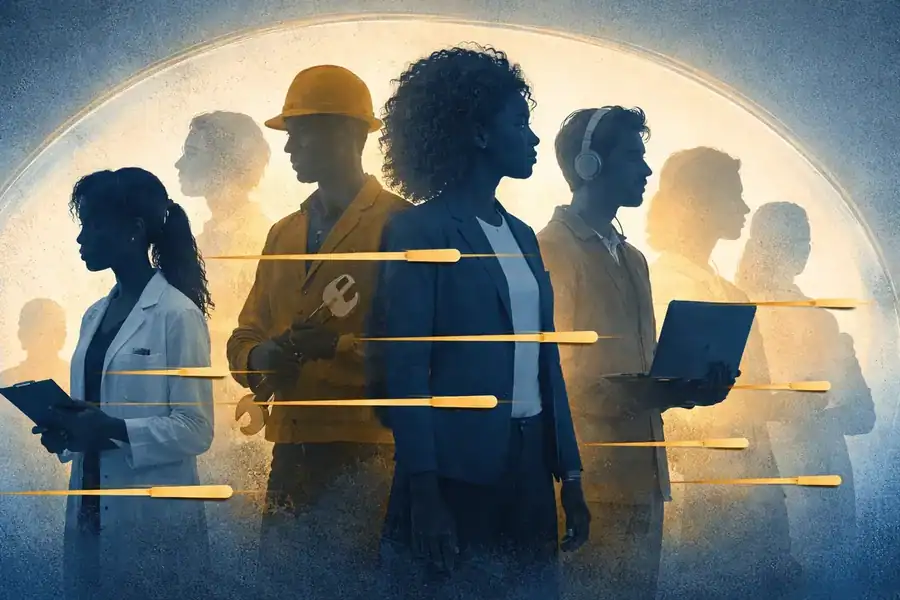
An exploration of why wage gaps persist across race and gender—even in workplaces that rely on neutral, standardized pay systems—and how history,…
Read the story
A clear overview of how convict leasing replaced slavery with a new labor system shaped by race, economics, and state power, and how this model…
Read the story
A concise history of “low road capitalism,” showing how cost-cutting labor models shaped by race, class, and gender evolved from slavery and…
Read the story
Productivity metrics aren’t new — they began in systems of unequal labor, grew through industrialization, and evolved into today’s digital…
Read the story
America’s workplace was shaped by systems that divided labor, opportunity, and protection by race, class, gender, and immigration status. This…
Read the story
Infant mortality in America has deep historical roots. This article explores how inequality in housing, labor, healthcare, and policy shaped early…
Read the story
Many harmful medical assumptions about Black women didn’t come from science — they came from centuries-old myths created to justify exploitation…
Read the story
Black maternal mortality is not a medical mystery — it’s the result of historical inequality, medical bias, and systems shaped long before modern…
Read the story
Obstetric medicine didn’t develop in a vacuum. This article explores how childbirth care in early America was shaped by gender, race, power,…
Read the story
Many racial stereotypes didn’t appear by accident — they were created to justify violence, exclusion, and inequality. This article explores how…
Read the story
Forced reproduction wasn’t an accident of slavery — it was a system that shaped family life, labor, wealth, and identity across early America.…
Read the story
Reproduction shaped far more than family life in early America — it shaped labor, citizenship, identity, and belonging. This article explores how…
Read the story
Access to land, housing, education, work, and opportunity has never been distributed evenly in America. This article explores how race shaped…
Read the story
Race and nationality weren’t always linked — they became intertwined through law and policy. This article explores how identity, citizenship, and…
Read the story
Anti-miscegenation laws shaped family life for centuries. This article explores how interracial marriage was criminalized, who these laws…
Read the story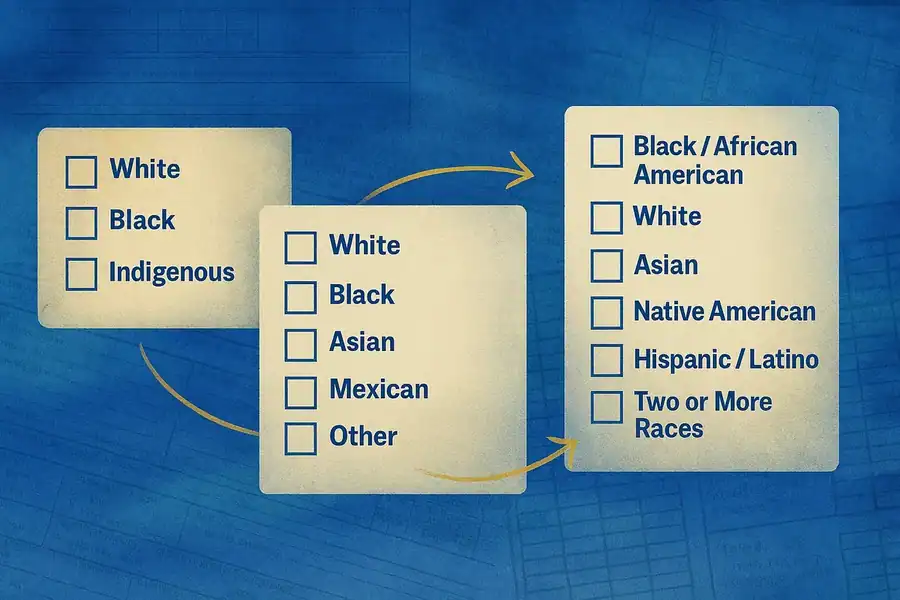
Racial categories in America were never fixed — they shifted constantly with politics, census rules, and economic needs. This article explores how…
Read the story
The One-Drop Rule shaped how identity, belonging, and opportunity worked in America. This article explores how a single idea — rooted in power,…
Read the story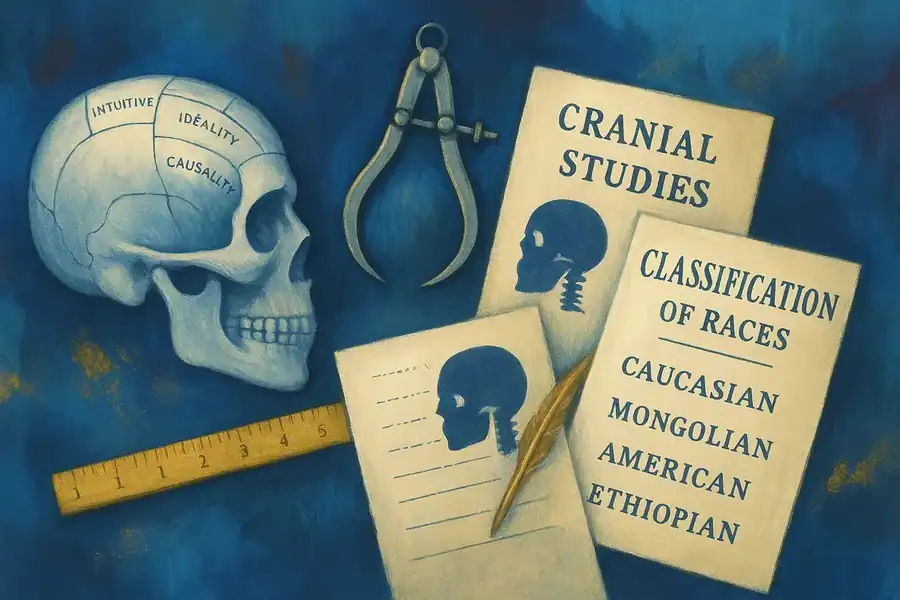
Early America embraced racial “science” that wasn’t science at all — it was a tool to justify laws, labor systems, and social hierarchies. This…
Read the story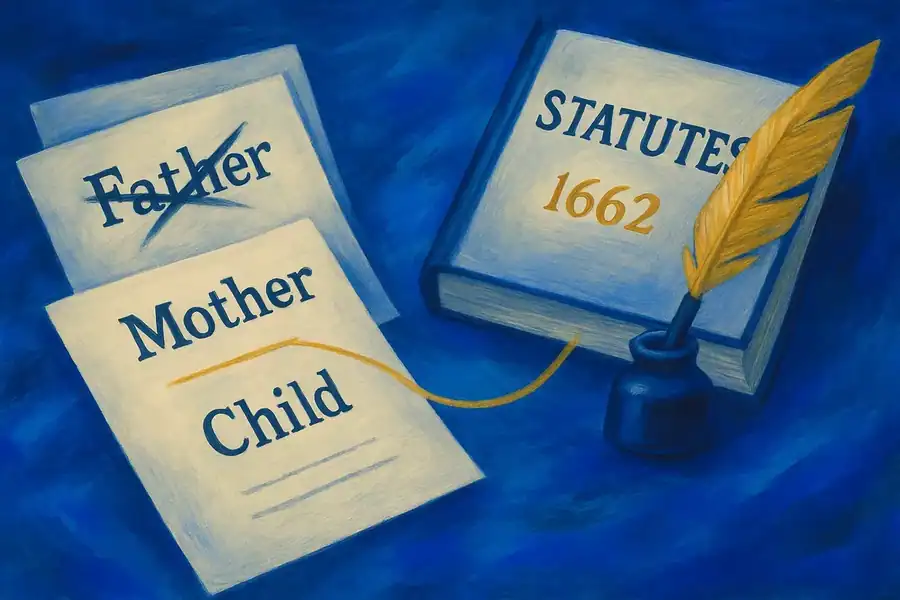
In 1662, a short Virginia law rewrote centuries of tradition and reshaped American family life. This article explores how tying a child’s status…
Read the story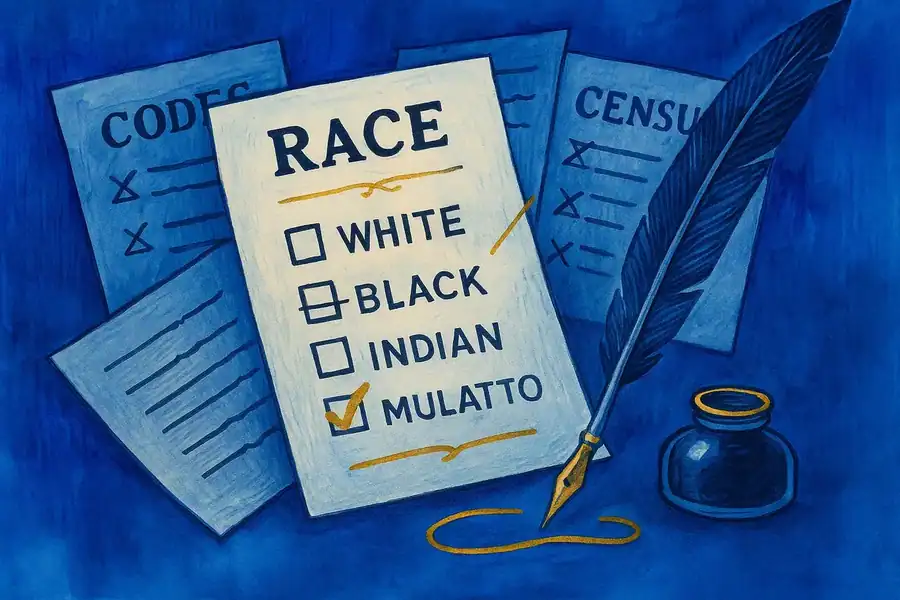
Race in America didn’t appear on its own — it was constructed through laws, forms, and policies that shaped who belonged where. This article…
Read the story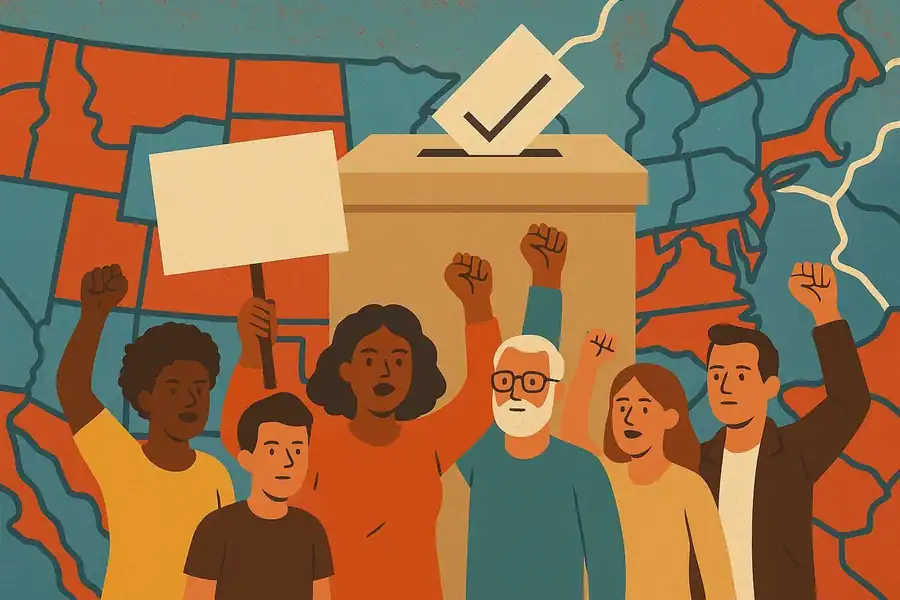
Barriers to the ballot have never gone uncontested. From Reconstruction through Jim Crow, from poll taxes to voter ID laws, people have always…
Read the story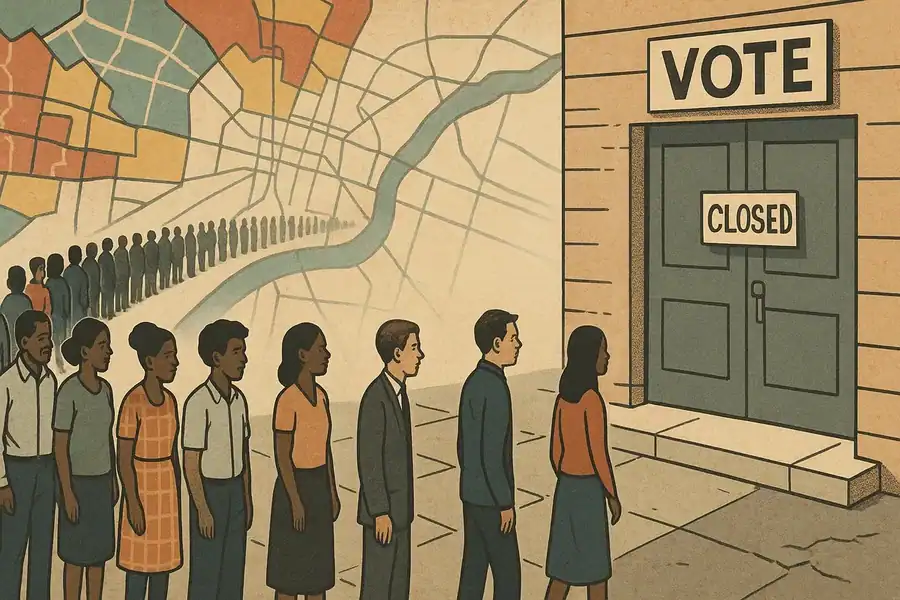
Poll taxes and literacy tests are gone. The Voting Rights Act outlawed the worst barriers. But in the 21st century, voter suppression didn’t…
Read the story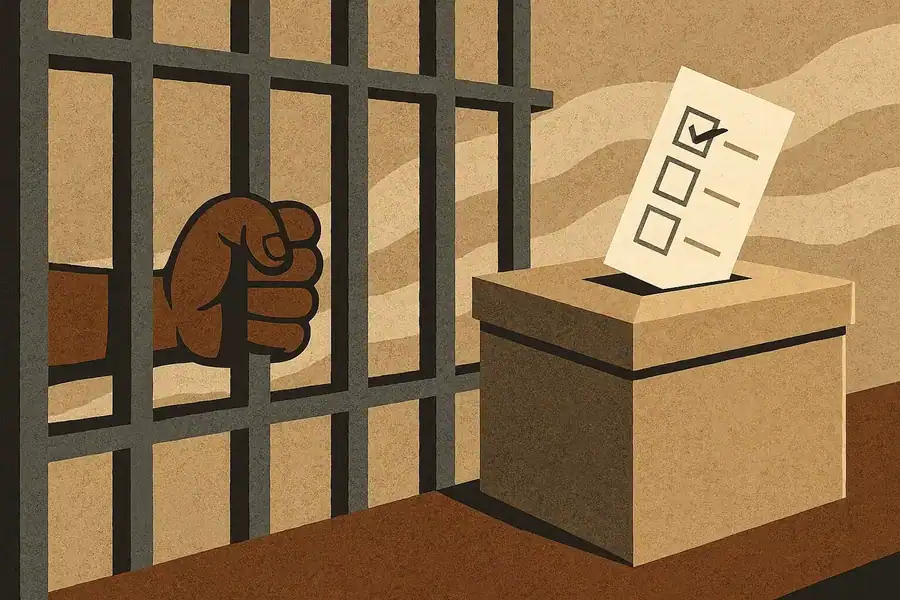
When someone finishes a prison sentence, the expectation is that they’ve “paid their debt to society.” But for millions of Americans, that debt…
Read the story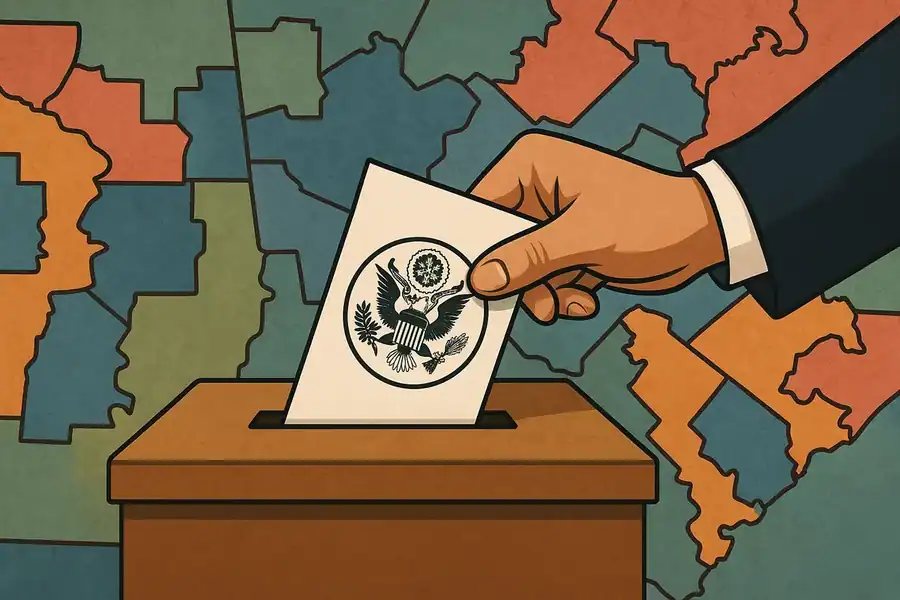
By 1965, the fight for the vote had already stretched across generations. Poll taxes, literacy tests, intimidation, and gerrymandering had…
Read the story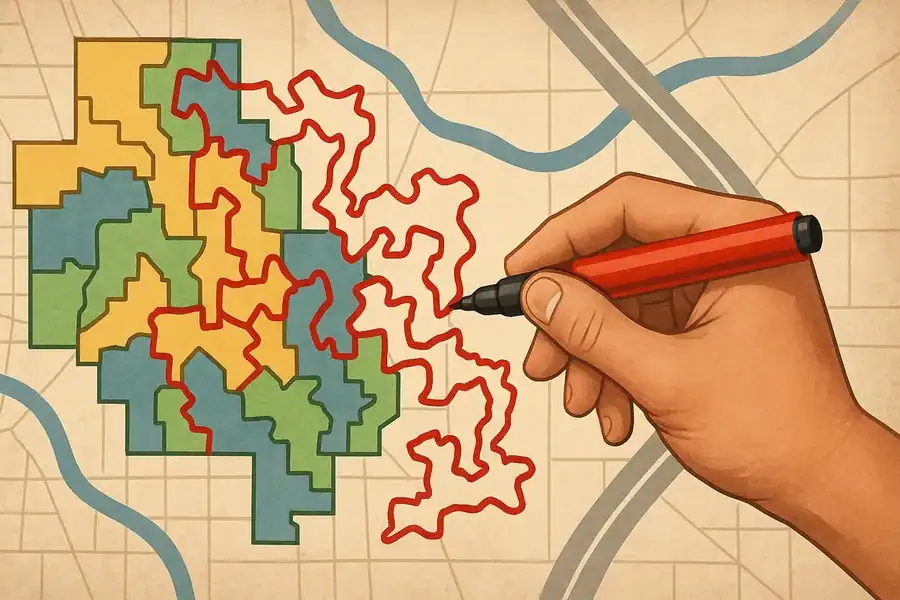
Voters are supposed to choose their leaders. But in many cases, it works the other way around: leaders choose their voters. That’s the power of…
Read the story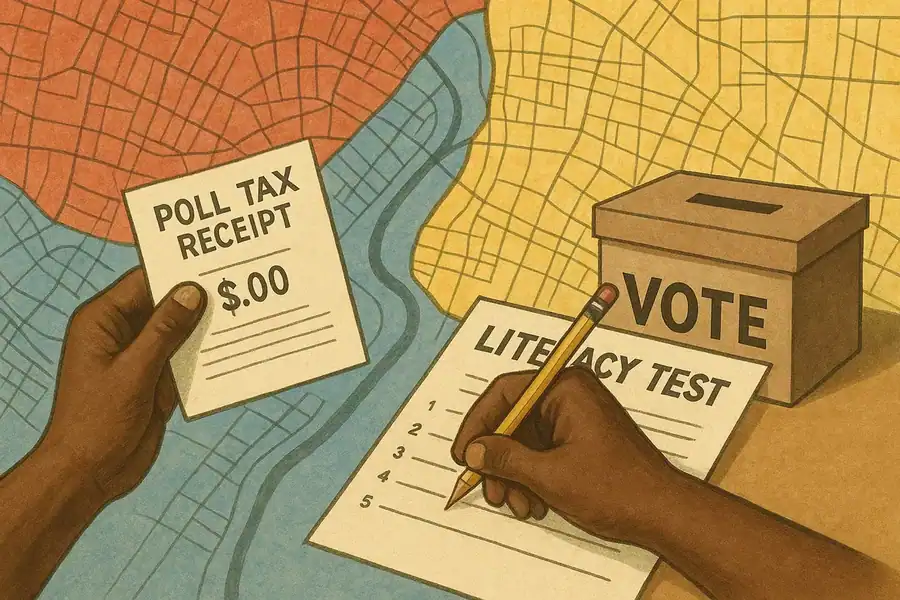
After the Civil War, the 15th Amendment declared that no one could be denied the right to vote because of race. On paper, freedom at the ballot…
Read the story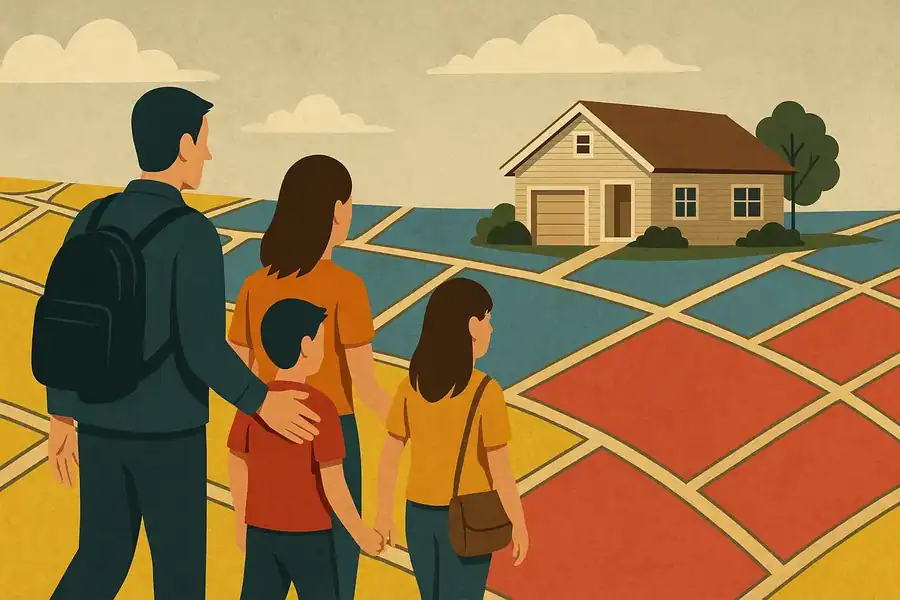
In the mid-20th century, cities across America saw a dramatic shift. White families packed up, left their urban neighborhoods, and moved to newly…
Read the story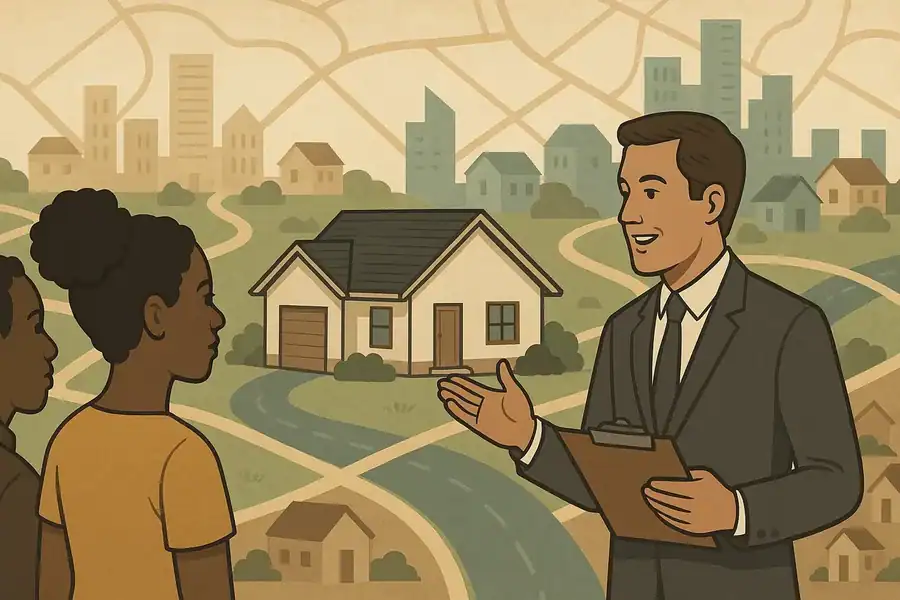
“In the 1980s, a family in Iowa made an offer on a home. Years later, they learned their realtor had secretly raised their bid — not to help them,…
Read the story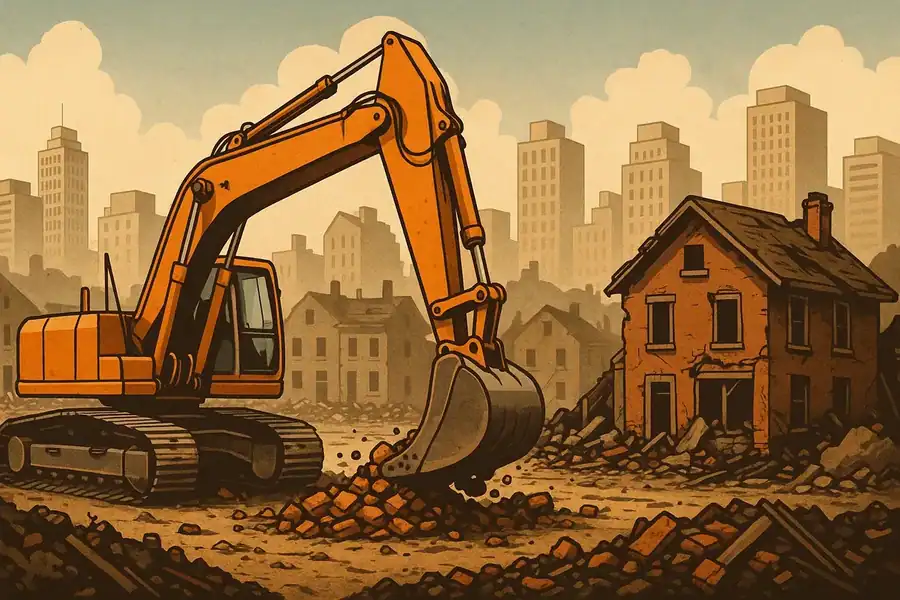
In the mid-20th century, American cities promised “progress.” Leaders called it urban renewal — a way to modernize neighborhoods, clear “blight,”…
Read the story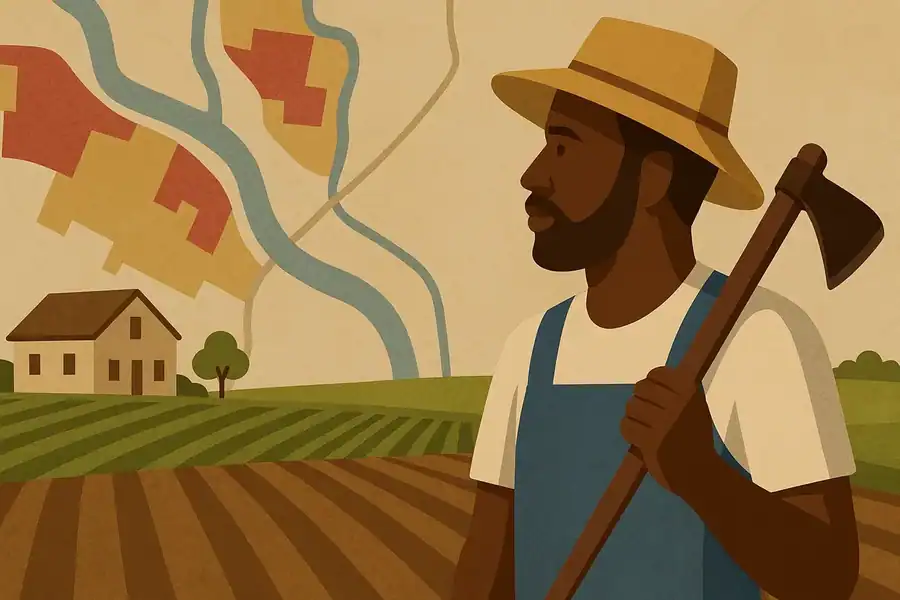
For generations, owning land meant freedom. For formerly enslaved people, farmland represented independence, stability, and the chance to pass…
Read the story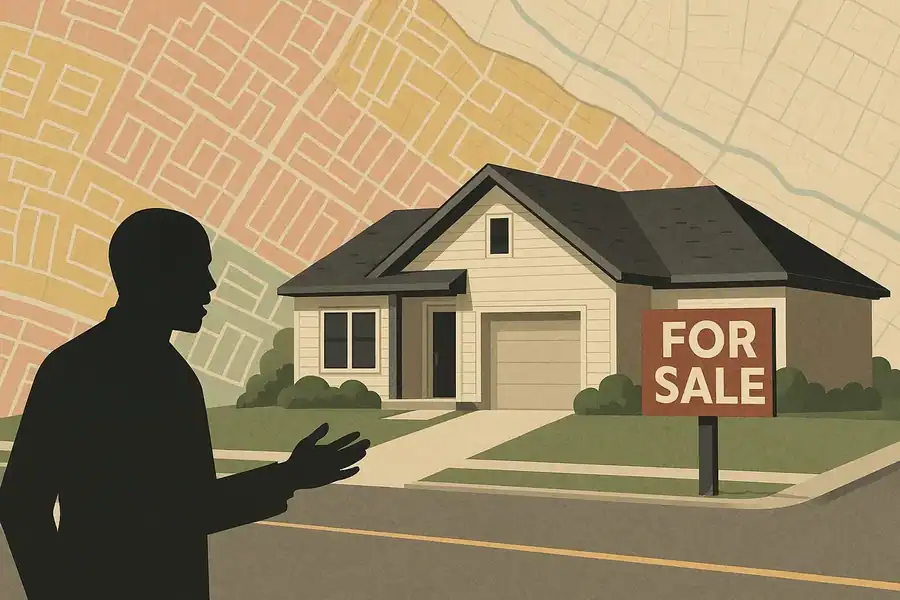
Imagine a knock at your door. A real estate agent warns you: “Black families are moving in. If you don’t sell now, your property value will…
Read the story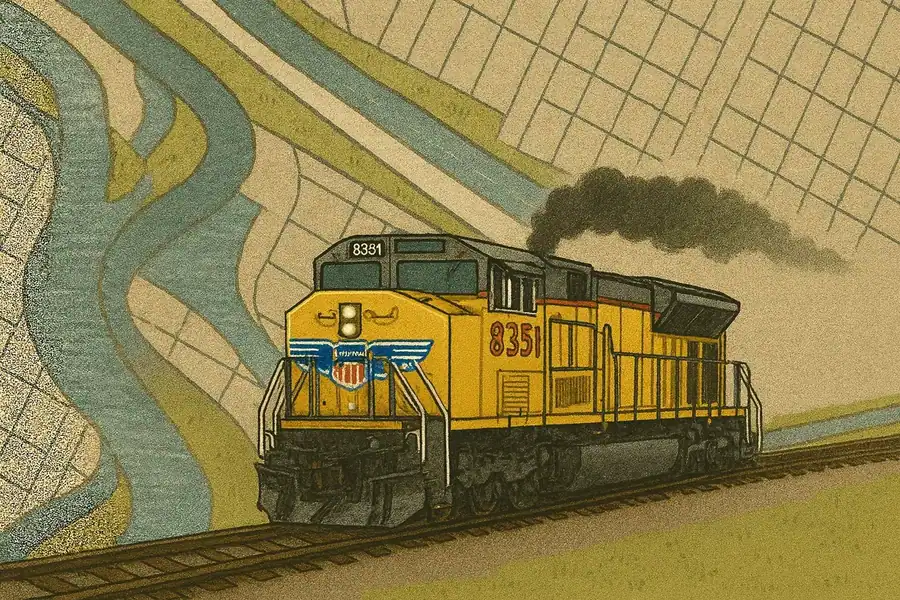
Look closely at almost any American city, and you’ll notice something: a set of railroad tracks, a highway, or a river dividing one neighborhood…
Read the story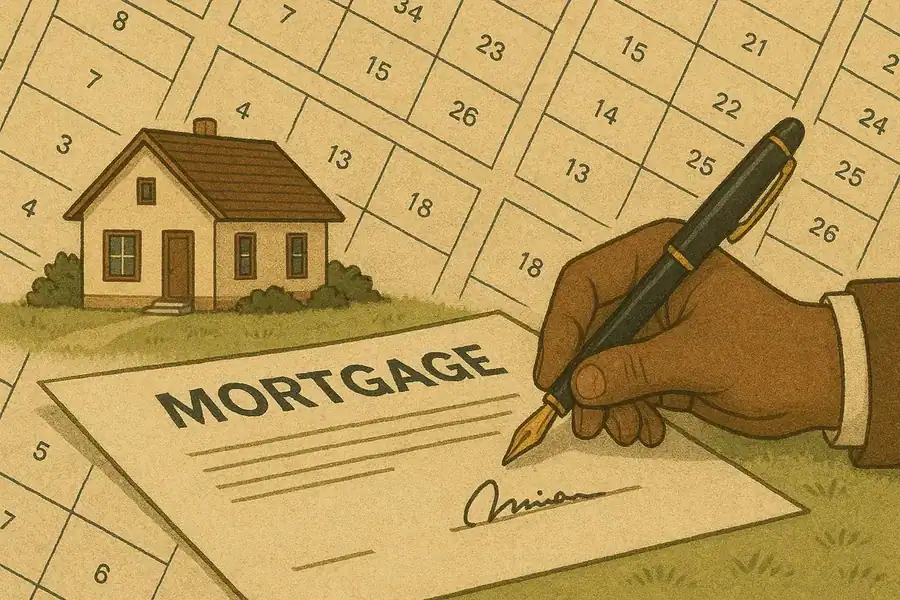
What if your ability to buy a house wasn’t decided by your savings, your credit, or your hard work — but by a single line written into the deed?…
Read the story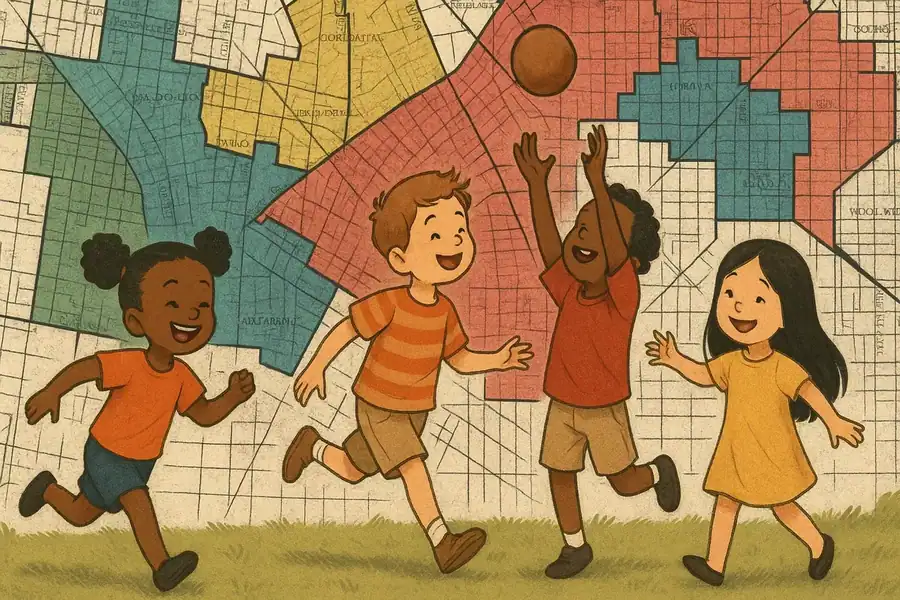
Imagine if the neighborhood you lived in determined whether you could buy a home, get a loan, or even build wealth for your children — not because…
Read the storyNo stories match those filters. Try another search or a different topic.