African American History & Civil Rights
How Local Organizers Protect Voter Access
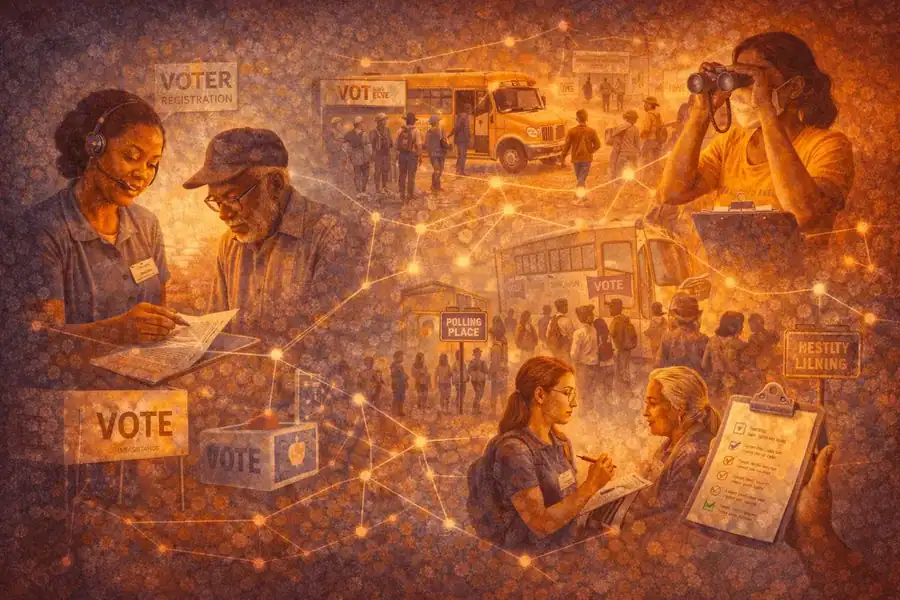
Local organizers play a critical role in protecting voter access by reducing barriers and responding to challenges where elections actually occur.
Access, exclusion, and struggle over political participation and representation.
All topicsLocal organizers play a critical role in protecting voter access by reducing barriers and responding to challenges where elections actually occur.
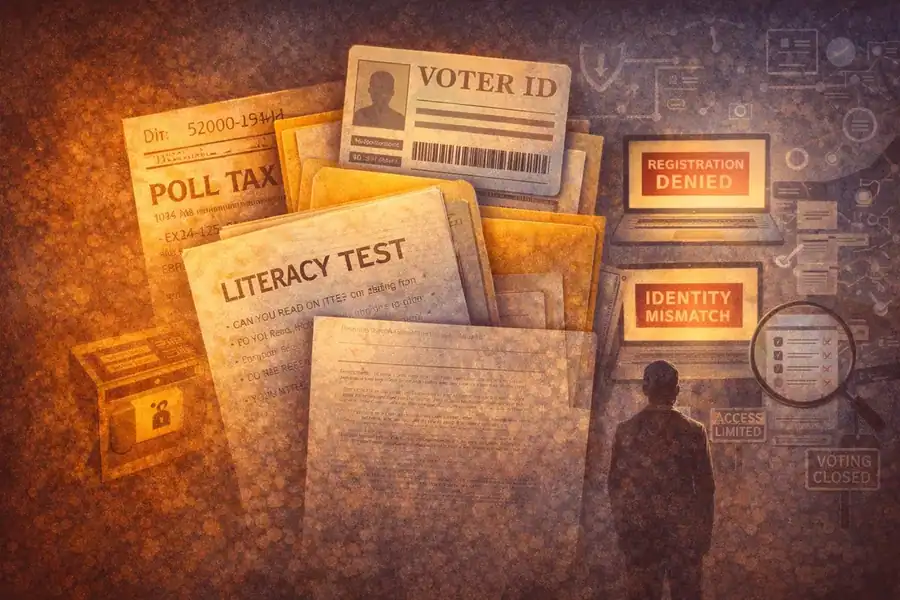
Modern voting restrictions combine old mechanisms with new tools. This article explains what has changed, what hasn’t, and why it matters.
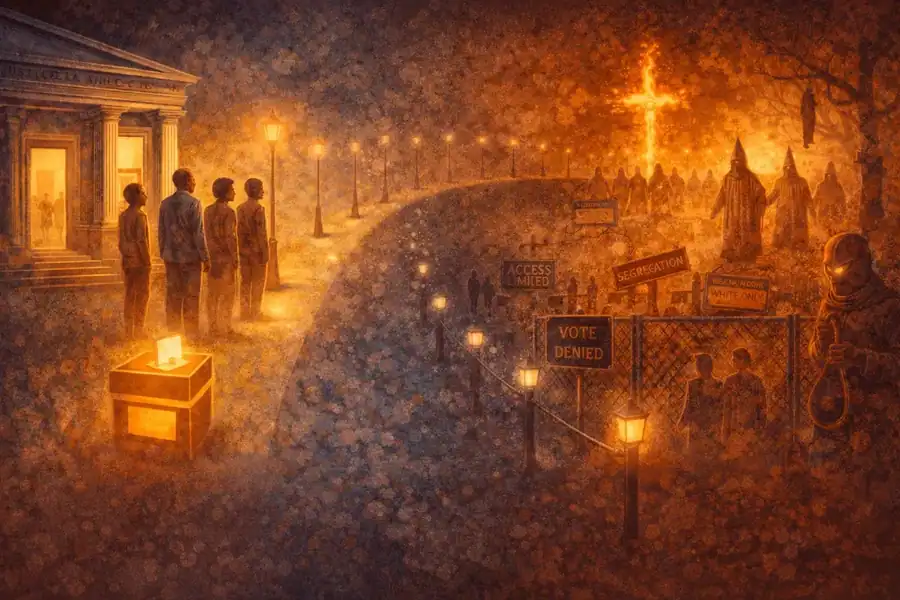
After Reconstruction, American democracy narrowed by design. The Nadir of race relations shows how rights can exist without enforcement.
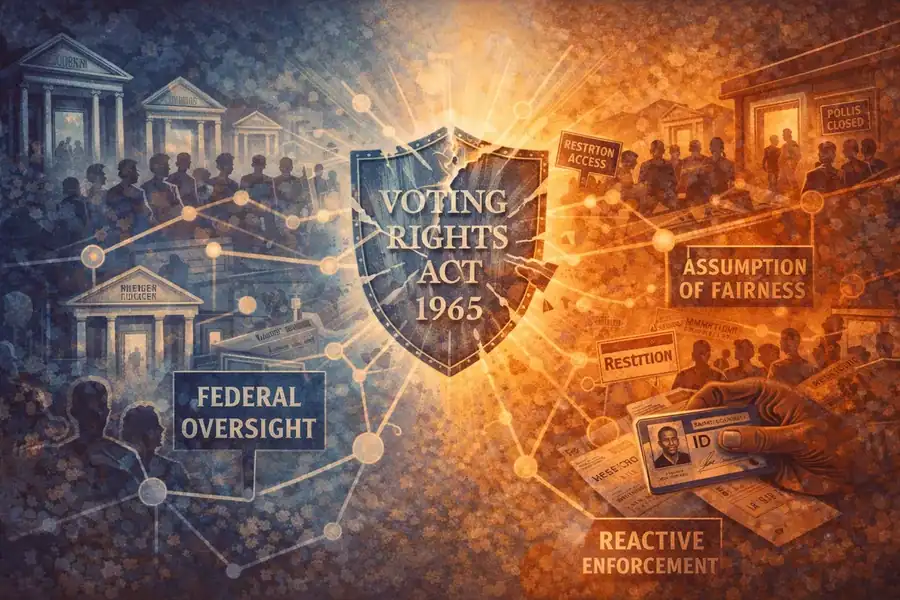
The Voting Rights Act enforced access where rights alone fell short. This article explains why it was needed—and what changed when protections weakened.
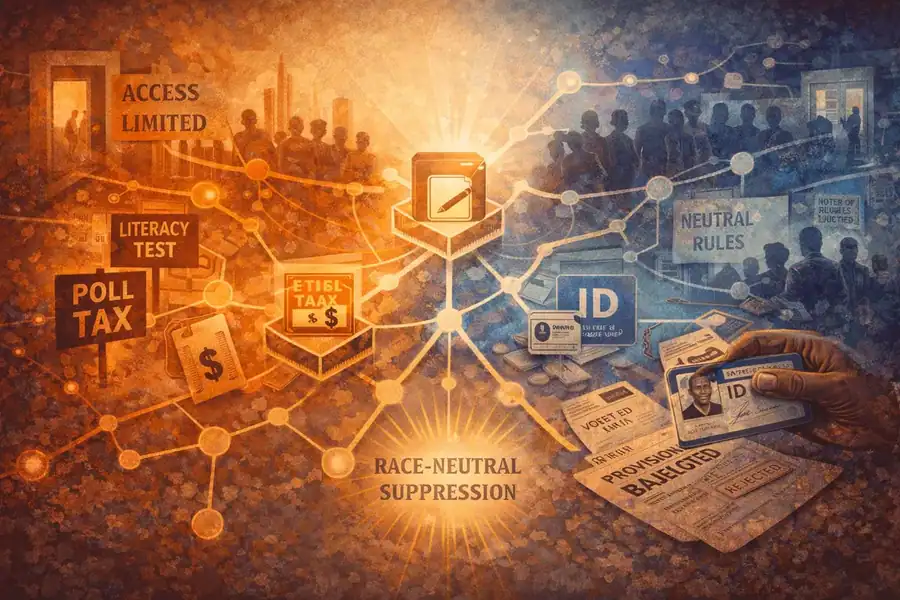
Literacy tests and poll taxes restricted voting without naming race. This article explains how “neutral” rules produced unequal participation.
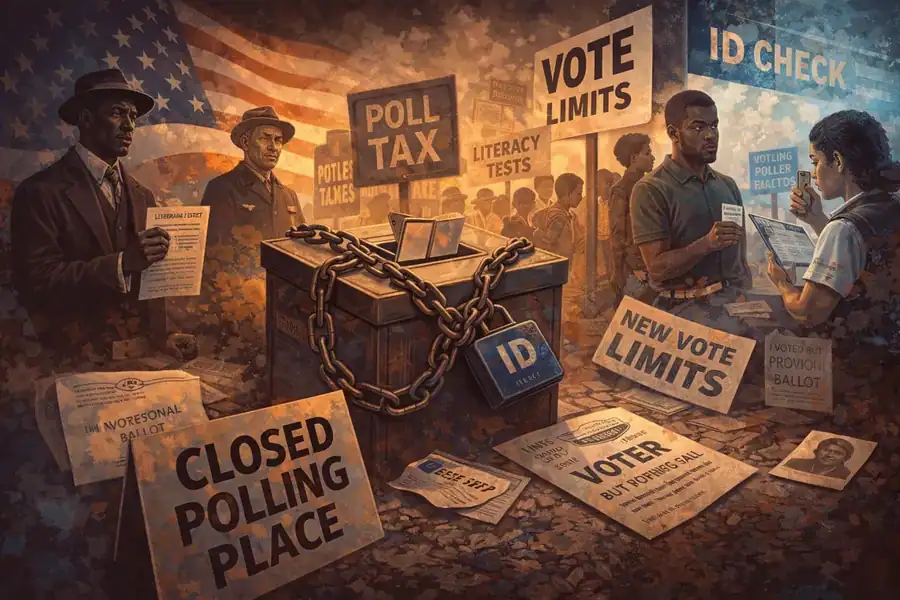
Voting rights have expanded over time—but restriction has adapted with each generation. This article explores how barriers persist without explicit exclusion.
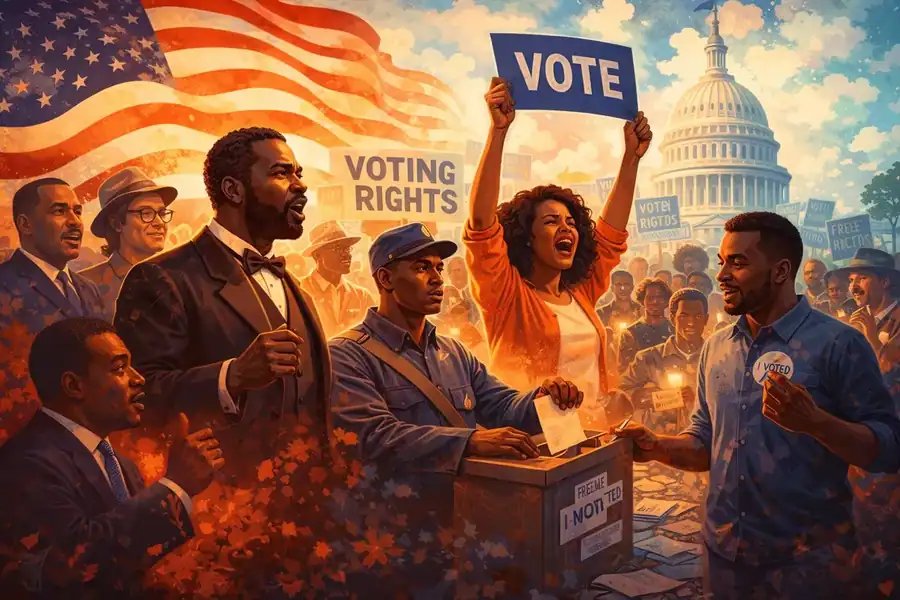
American democracy expanded through struggle, not consensus. Black Americans have been central to widening participation and redefining who democracy is for.
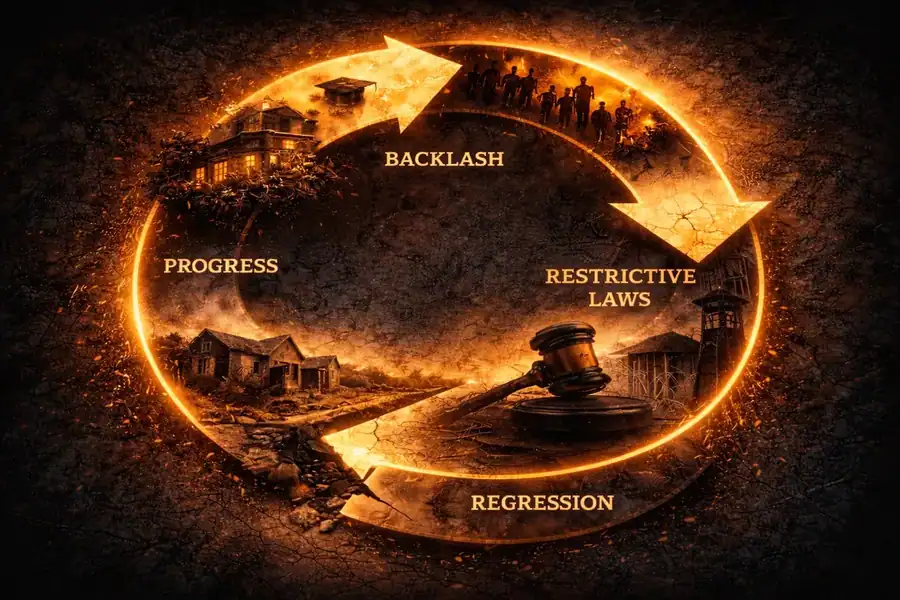
A look at how Black progress has repeatedly been followed by backlash and restrictive laws—and why the cycle continues across generations.
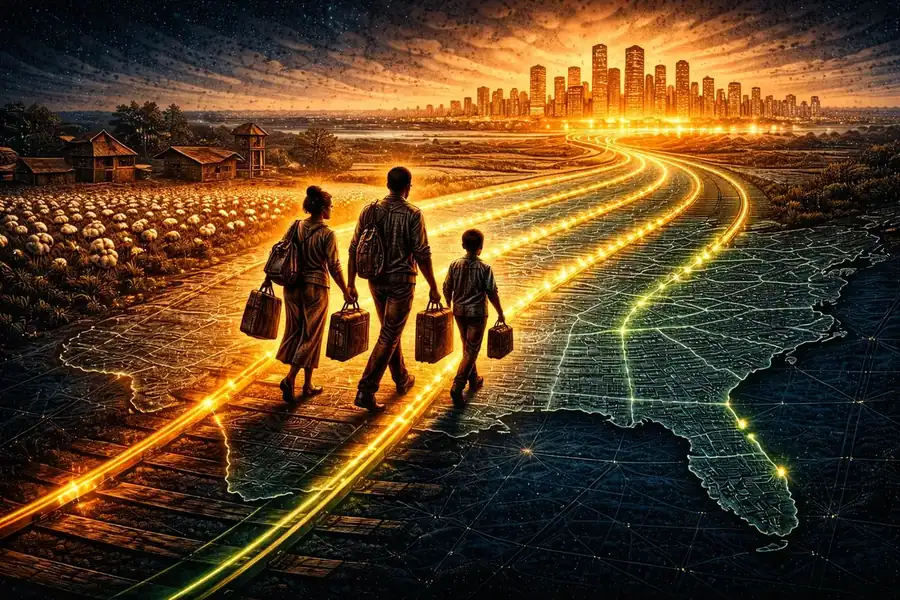
An explanation of the Great Migration as a strategic economic response to debt, violence, and blocked opportunity—and how migration reshaped American labor and cities.
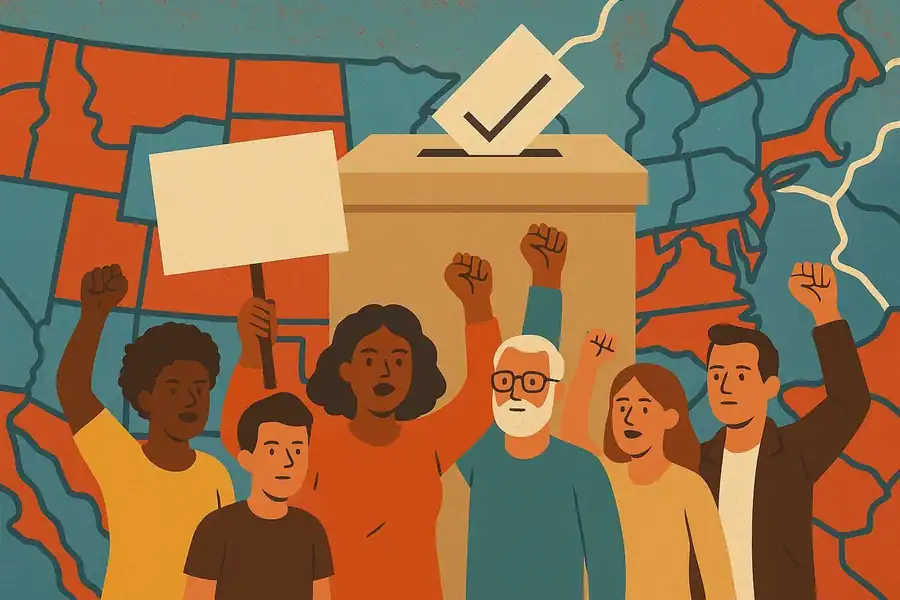
Barriers to the ballot have never gone uncontested. From Reconstruction through Jim Crow, from poll taxes to voter ID laws, people have always found ways to push back. The story of voting in America isn’t just about suppression. It’s about resilience — communities organizing, neighbors helping neighbors, and citizens insisting that democracy belongs to all of us.
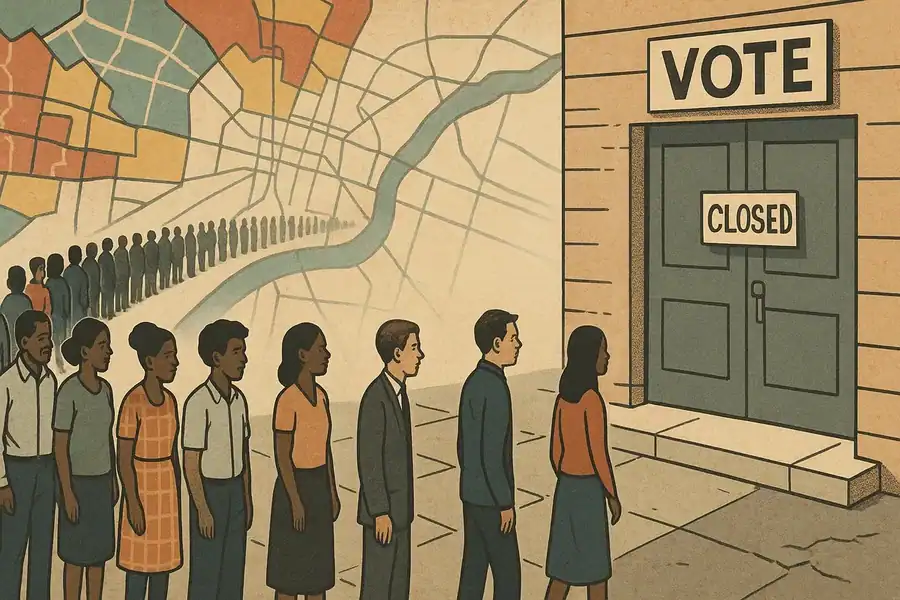
Poll taxes and literacy tests are gone. The Voting Rights Act outlawed the worst barriers. But in the 21st century, voter suppression didn’t disappear — it just changed form. Instead of explicit bans, today’s tactics raise barriers that look neutral on the surface but still make it harder for certain groups to vote.
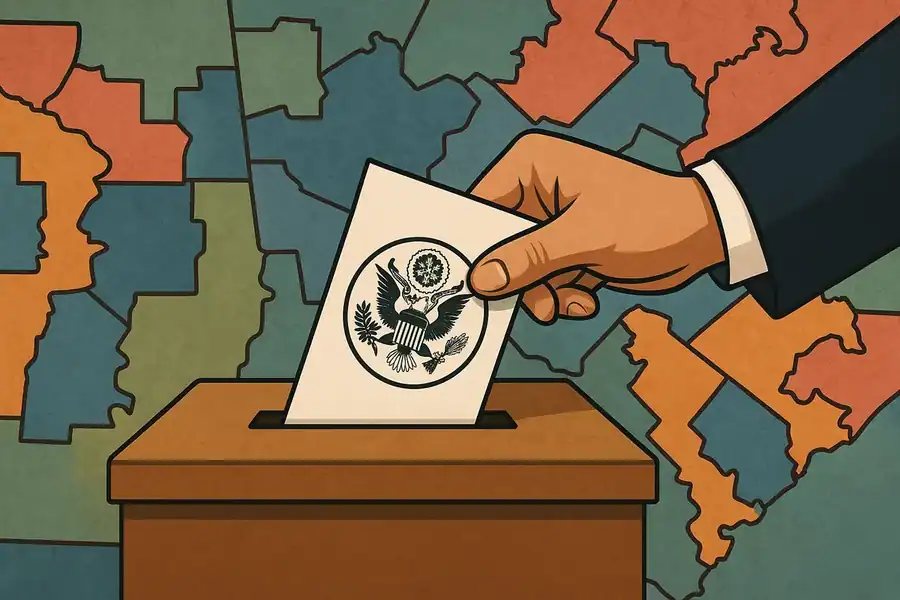
By 1965, the fight for the vote had already stretched across generations. Poll taxes, literacy tests, intimidation, and gerrymandering had silenced millions of voices — especially Black voters in the South. But the marches in Selma, the sacrifices in Mississippi, and the voices rising across the nation finally pushed America to act. The result was the Voting Rights Act of 1965 — one of the most significant civil rights laws in U.S. history.
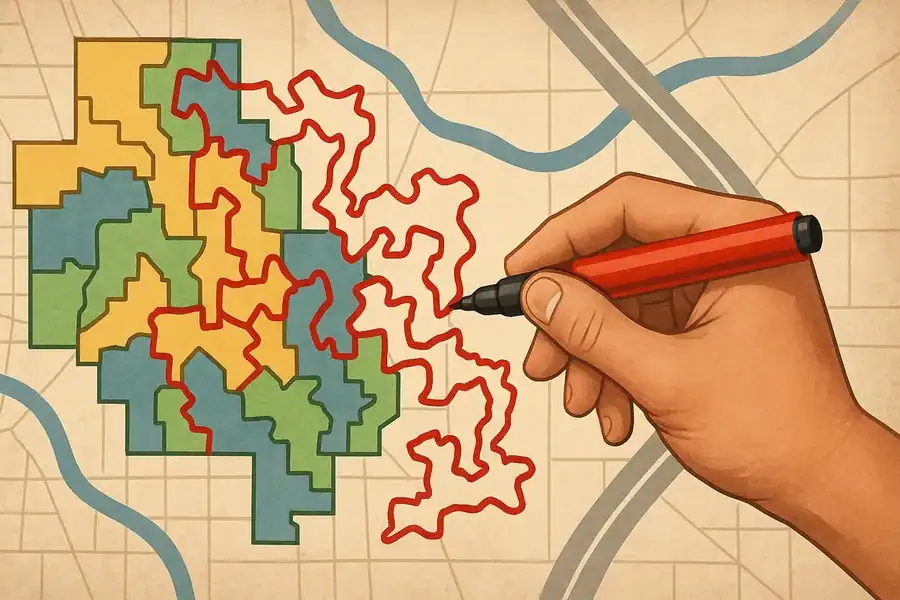
Voters are supposed to choose their leaders. But in many cases, it works the other way around: leaders choose their voters. That’s the power of gerrymandering — the manipulation of political district boundaries to give one party or group an advantage. It’s not new, but its impact today is as strong as ever.
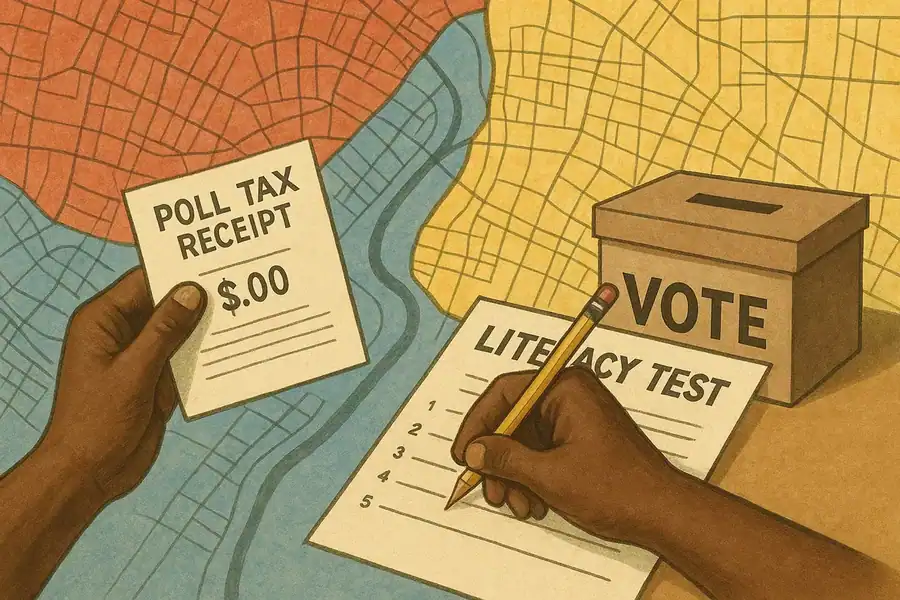
After the Civil War, the 15th Amendment declared that no one could be denied the right to vote because of race. On paper, freedom at the ballot box was guaranteed. But by the late 1800s, states across the South found ways around that promise. They didn’t outlaw Black voting outright — instead, they created barriers like poll taxes and literacy tests that made voting practically impossible for millions of Black citizens and poor whites.