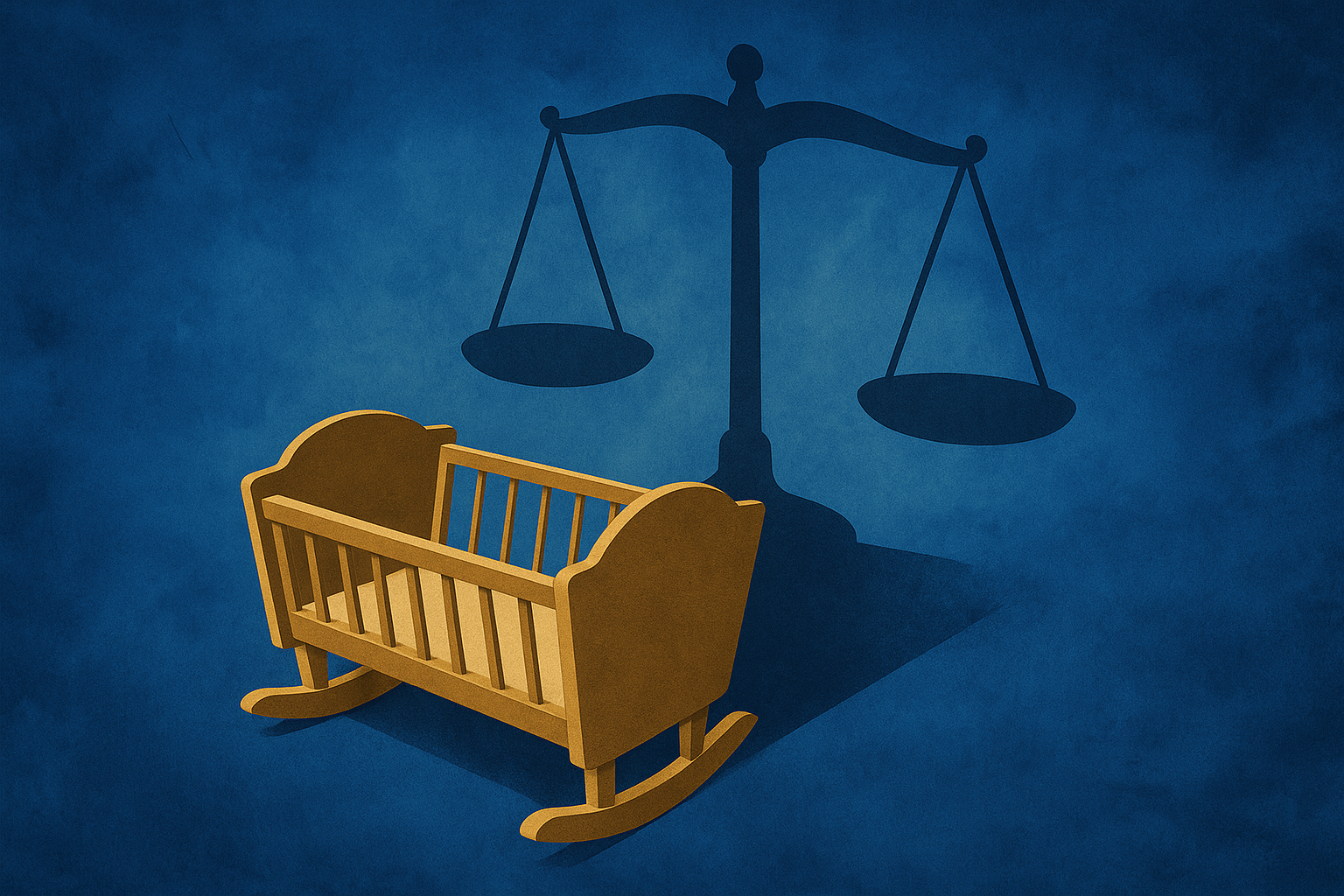
When we talk about “reproductive control” today, we often think about debates over rights, health care, or modern policy. But long before those conversations took shape, reproduction itself was a site of immense political and economic power in early America.
In fact, few forces shaped early American society more directly than decisions about who was allowed to form families, who was prevented from doing so, and whose bodies were treated as a source of labor or population growth.
Reproductive control wasn’t an accident of history. It was an intentional system — built through laws, customs, and economic incentives — that influenced families across many communities for generations.
The 1662 law that bound a child’s status to the mother meant enslaved women’s reproductive lives were directly linked to the expansion of slavery. Children were considered property from birth — increasing the wealth of slaveholders.
This was reproductive control at its clearest: the state and enslavers made decisions about pregnancy, family separation, and bodily autonomy.
Forced migrations, boarding schools, and cultural suppression broke apart family networks. Control didn’t always target reproduction directly — sometimes it targeted the ability to raise children within their cultural world.
Anti-immigrant policies limited who could enter the country, who could marry whom, and who could have families recognized by the state. Many Asian, Mexican, and Eastern European families navigated an environment where creating or keeping a family together was legally precarious.
In many states, children from impoverished families were taken and placed into institutions or “apprenticeships,” echoing earlier systems of coerced labor and family disruption.
Married women had limited rights to their own bodies under coverture. Many women lacked the legal ability to make decisions about pregnancy, property, or health without the consent of husbands or guardians.
Across these different systems, reproduction — who could have children, raise children, or pass on opportunity — became a central tool of power.
Experienced the most systematic and far-reaching reproductive control, from slavery through Jim Crow, with family separation, coerced labor, and denial of bodily autonomy.
Faced reproductive disruption through assimilation policies, forced schooling, and destruction of kinship networks.
Chinese Exclusion, anti-miscegenation laws, and deportation campaigns all shaped whether families could form, stay together, or be recognized legally.
Often targeted explicitly because their existence challenged racial boundaries.
Subject to “child welfare” interventions based not on abuse but on class and cultural norms.
Encountered limits on consent, property, bodily autonomy, and family structure — through law, custom, and economic constraints.
Reproductive control shaped far more than one community — it reshaped the whole social landscape.
Family, inheritance, citizenship, marriage, and “moral conduct” laws decided who could have recognized families.
Vagrancy laws, apprenticeship courts, and marriage restrictions created a legal environment where some families were always vulnerable.
Systems that valued the reproduction of enslaved laborers or limited the reproduction of targeted groups shaped behaviors across entire regions.
Plantations, missions, child welfare agencies, boarding schools, hospitals, and poorhouses all played roles in controlling or disrupting family formation.
Norms around “fitness,” “purity,” or “respectability” often justified policies that targeted marginalized groups.
Reproductive control was woven into early America at every level — from the statehouse to the household.
Even though the legal systems have changed, echoes remain:
The systems aren’t the same — but the patterns didn’t disappear overnight.
Reproductive control isn’t only about the body — it’s about the future.
If a society controls who can form families, who can pass on opportunity, and who can build stable homes, then it controls the direction of entire communities. Understanding how this worked in early America helps us see why:
When we understand the past, we help untangle the systems we still live with today.
Smithsonian NMAAHC — Family & Resistance Collections
https://nmaahc.si.edu/
Library of Congress — Early American Family Law
https://loc.gov/
National Archives — Citizenship & Family Legislation
https://archives.gov/
Indigenous Digital Archive — Boarding School Materials
https://boardingschoolhealing.org/
Migration Policy Institute — Family Reunification Reports
https://migrationpolicy.org/