
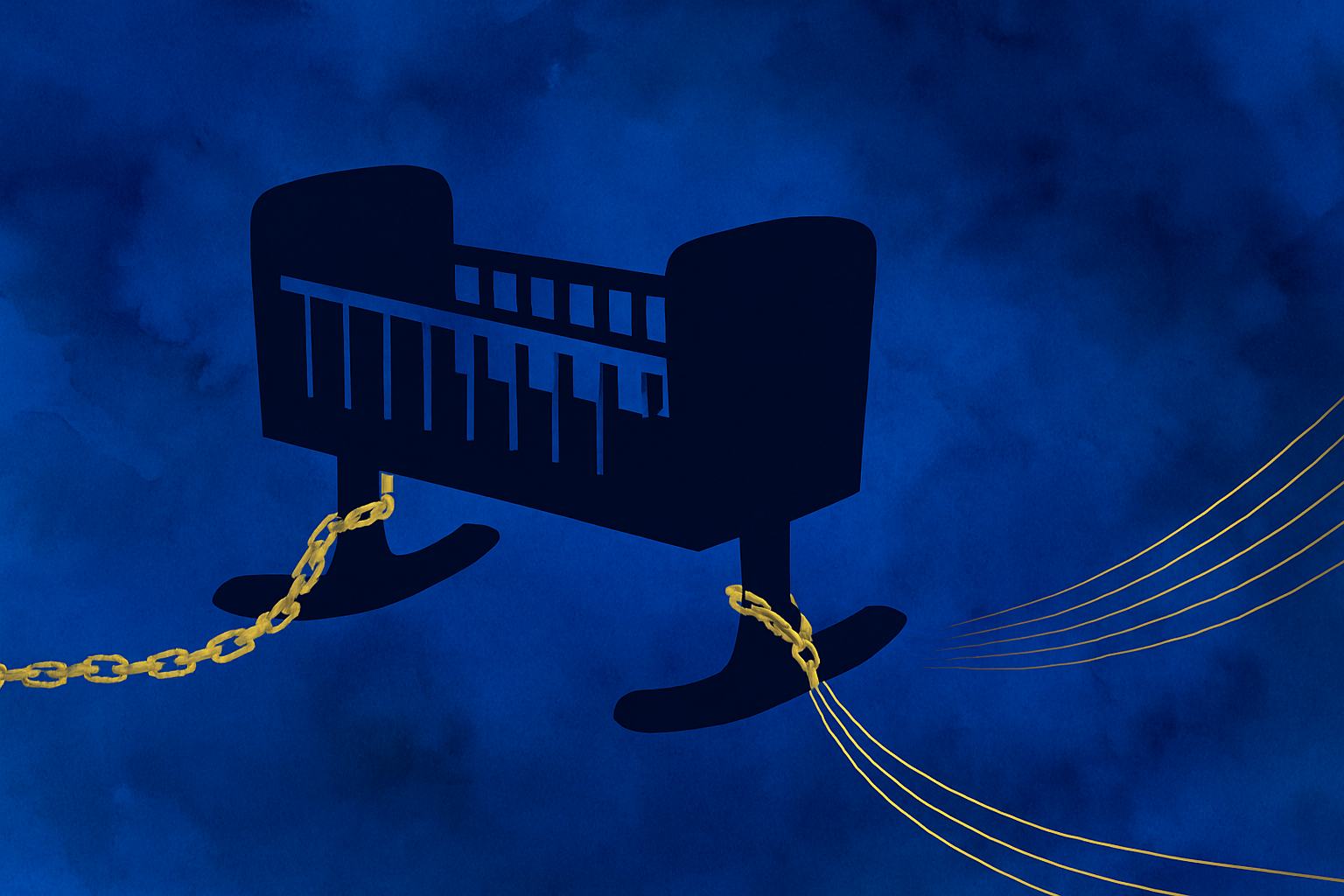
When people learn about slavery in school, the focus is usually on forced labor — the violence, the work, the profits, and the daily control enslaved people lived under. What often gets left out is something even more foundational: the system didn’t just rely on labor. It relied on forced reproduction.
Beginning in the 1600s, American slavery became a system where children inherited the status of their mothers. That one legal decision transformed enslaved women’s bodies into engines of economic growth. The birth of a child wasn’t a private family moment — it was counted as new property for someone else.
This part of history is often unspoken, but understanding it matters. It reshaped family structures, distorted gender roles, and created generational trauma across many communities. And it reveals something essential: slavery expanded not only through violence, but through control over the most intimate parts of life.
Forced reproduction took many forms. Some were explicit. Others were hidden inside everyday plantation life. But they all served the same purpose: to increase the enslaved population.
Enslaved women could not refuse sexual access demanded by enslavers, overseers, or others with power. Consent was not recognized under law.
Pregnancy was encouraged or demanded — through rewards, punishment, or manipulation.
Some enslaved women were paired with men chosen by enslavers.
Children were sold away, partners were split, and kinship networks were destabilized to maintain control.
This wasn’t just cruelty — it was strategy.
Plantation records sometimes tracked births the same way they tracked crops or livestock.
Birth numbers were used to calculate wealth.
Enslaved women received little to no care during or after pregnancy, endured unsafe birthing conditions, and were often returned to labor far too soon.
This was not accidental or chaotic. It was systemic.
Enslaved women carried the direct burden of forced reproduction, and their families bore the trauma of separation, coercion, and the loss of bodily autonomy.
Frequently depicted as breeding tools or denied recognition as fathers in family life — undermining their roles and relationships.
Often born into slavery, regardless of paternal ancestry. Many lived with identities shaped by power rather than personal history.
While not subjected to forced reproduction, they often faced early systems of “apprenticeship” and child removal that reflected class-based family control.
Experienced family separation and reproductive disruption through boarding schools, missions, and assimilation policies.
Forced reproduction doesn’t belong to one group’s story — it intersects with family history across many communities, in different ways.
Three large forces drove the system:
When the U.S. banned the importation of enslaved Africans in 1808, enslavers turned even more heavily to reproduction to increase their labor force.
As cotton moved west, so did demand for enslaved labor.
Enslavers sometimes sold children born in the East to plantations in the Deep South.
Slaveholders profited not only from labor, but from the expected future births of enslaved women.
That meant childbirth became an economic calculation.
Forced reproduction wasn’t a side effect — it was a core business model.
The systems are gone, but the ripple effects remain:
The past doesn’t dictate the present — but it absolutely shaped the starting point.
Because forced reproduction wasn’t just a violation of the past — it was a system that reshaped:
When we acknowledge this truth, it becomes easier to see:
Understanding this history allows us to honor the families who resisted it — through love, community, and survival.
NMAAHC — Slavery & Family Collections
https://nmaahc.si.edu/
Library of Congress — Enslavement Records & Narratives
https://loc.gov/
National Archives — Plantation Records & Family Separation
https://www.archives.gov/
UNC — Slave Narratives Digital Archive
https://dc.lib.unc.edu/
Reproductive Justice History Project
https://www.rjhproject.org/