
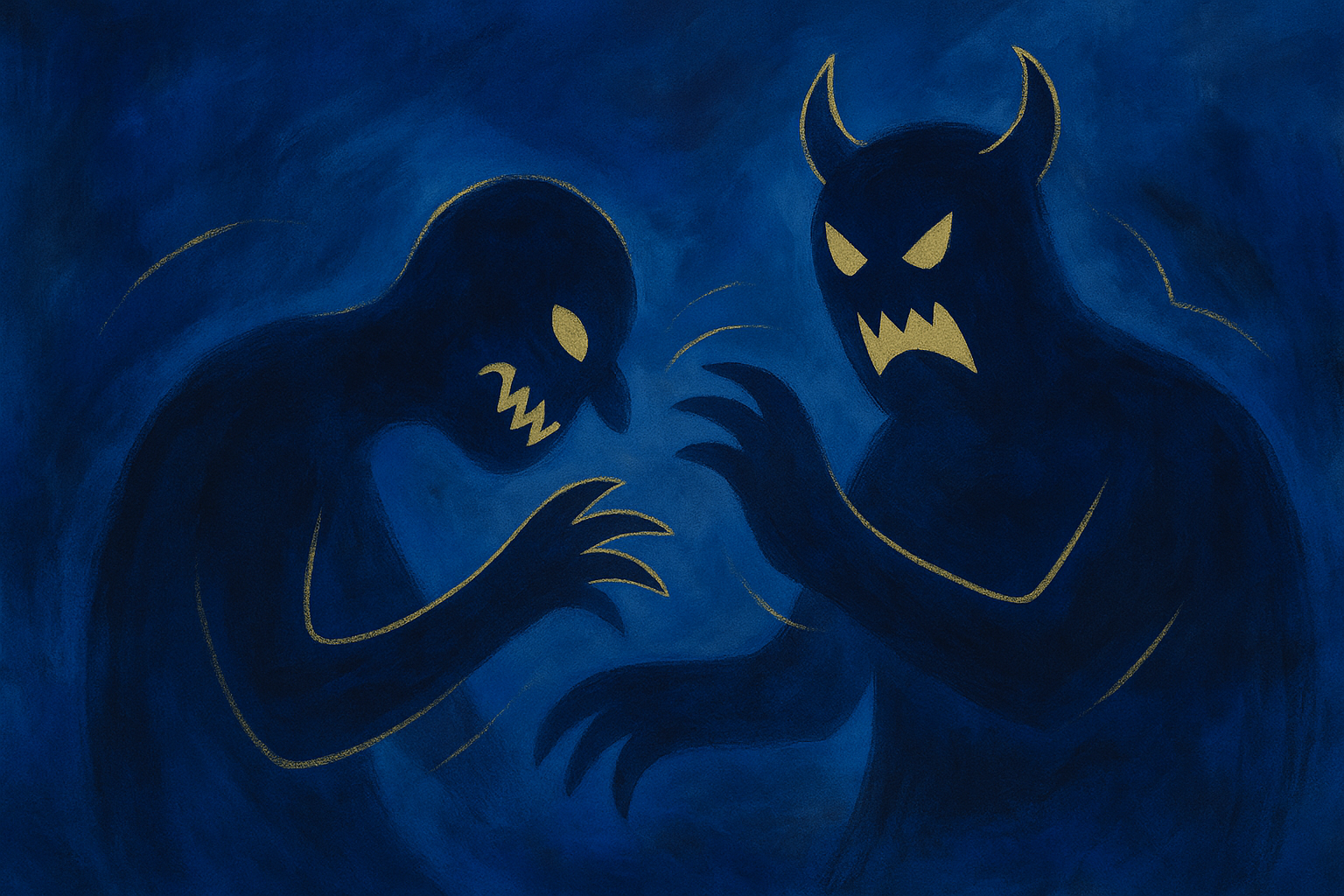
Stereotypes don’t come out of nowhere. They’re not misunderstandings or accidental exaggerations. Many of the racial stereotypes we still hear today — in media, in schools, in casual conversations — were deliberately created during some of the most violent chapters of American history.
These ideas weren’t just insults or caricatures. They were tools. They were built to justify systems of domination, land theft, forced labor, family separation, and inequality. And once created, they took on lives of their own — influencing policies, shaping public perception, and distorting how communities saw one another.
When you look closely, you can see a clear pattern: the stereotype follows the violence, not the other way around. Systems didn’t emerge because people believed stereotypes — stereotypes emerged to defend systems already in place.
To defend a system that relied on forced labor and bodily control, enslavers developed stereotypes that portrayed enslaved people as naturally suited for exploitation, incapable of self-direction, or lacking in humanity.
These narratives weren’t beliefs — they were political tools.
These ideas framed Indigenous nations as obstacles to civilization, erasing the complexity of thriving societies to justify land seizure, broken treaties, and forced relocation.
Chinese immigrants were painted as threats to labor.
Irish and Italian immigrants were called unfit or disloyal.
Mexican and Filipino workers were depicted as exploitable.
Each stereotype followed the needs of employers, politicians, or expansionist policies.
Long after families had lived in the U.S. for generations, stereotypes portraying Asian Americans as perpetual outsiders justified exclusion laws, segregation, and violence.
Black women, Indigenous women, immigrant women, and poor White women were each cast into stereotypes that justified reproductive control, labor exploitation, or surveillance of their families.
Across every one of these examples, the stereotype wasn’t the origin point — it was the excuse.
When enslaved people resisted, fought back, or ran, stereotypes suddenly intensified — framed as “proving” the need for harsher control.
Stereotypes about Indigenous people expanded after forcible relocation, not before, because the violence needed a story to defend it.
Anti-immigrant stereotypes surged whenever employers or politicians wanted cheaper labor or political leverage.
Stereotypes about purity, loyalty, or “race mixing” grew out of miscegenation laws — not the other way around.
Communities who were denied opportunity were then stereotyped as naturally poor or inferior, masking the systems that created the barriers in the first place.
When systems caused harm, stereotypes were the public-relations arm of the violence — retroactive justification.
Stereotypes used to justify forced labor, criminalization, surveillance, and family disruption.
Portrayed as less civilized to defend land theft and assimilation.
Depicted as dangerous, unassimilable, or disloyal to defend exclusion and violence.
Labeled as inferior or expendable to justify labor exploitation and segregation.
Targeted with stereotypes about threat or foreignness, especially in response to foreign policy events.
Framed as backward or unworthy to justify class-based control and child removal.
Stereotyped as unnatural or unstable to defend racial-purity laws.
No community escaped being stereotyped when it served someone else’s power.
Images and words framed communities as dangerous or inferior to rally voters.
False claims about intelligence, morality, or “fitness” used the language of science to disguise violence as evidence.
Generations grew up learning distorted histories and caricatures.
Stage shows, early films, and cartoons helped cement stereotypes in the national imagination.
Laws referenced stereotypes directly or indirectly — turning narratives into real consequences.
Once embedded in culture, stereotypes didn’t need to be repeated loudly to keep shaping outcomes.
Even when the original systems ended, the stereotypes they created kept circulating:
The violence is gone — but the stories linger.
Because stereotypes didn’t come from personal prejudice.
They came from systems of power.
When we recognize that stereotypes were engineered to defend violence, we can:
Learning this history makes it possible to step outside the stereotypes — and see the people, families, and communities behind them.
NMAAHC — Stereotypes & Representation Collections
https://nmaahc.si.edu/
Library of Congress — Historical Caricatures Archive
https://loc.gov/
PBS — Race: The Power of an Illusion
https://www.pbs.org/
American Anthropological Association — Race & Representation
https://www.americananthro.org/
Southern Poverty Law Center — Hate & Propaganda Resources
https://splcenter.org/