
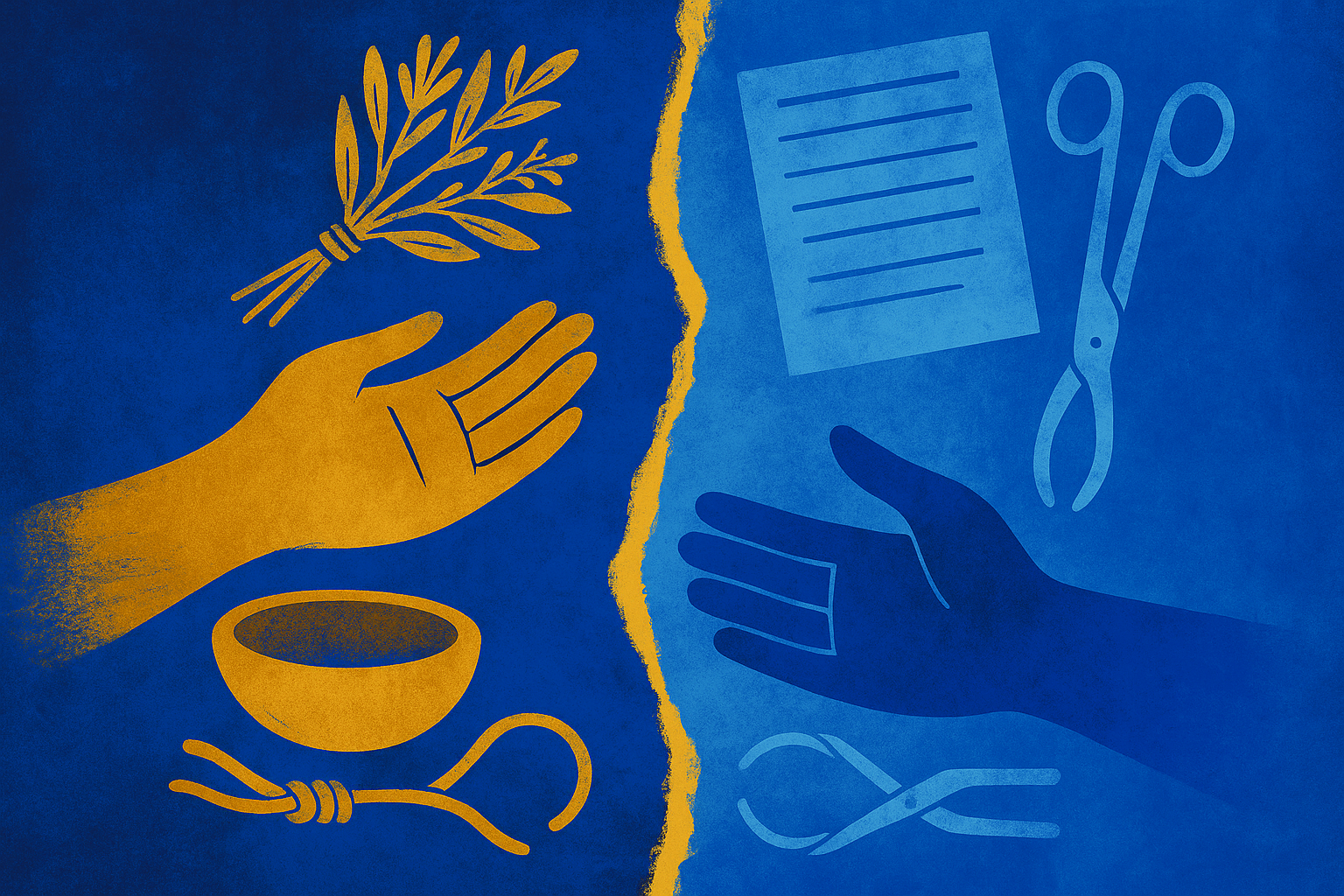
When people think about obstetric medicine — the practices that guide pregnancy, birth, and maternal health — we often imagine a field grounded in science and compassion. But the origins of obstetric medicine in America tell a more complicated story.
Early obstetrics wasn’t just a medical development. It was shaped by power, gender roles, racial hierarchy, and economic systems. Many of the ideas that shaped pregnancy and childbirth care — who received it, who provided it, and whose knowledge counted — were born during periods of deep inequality.
Understanding this history matters because the echoes still shape how families experience pregnancy and birth today.
Long before obstetric medicine became a professional field, birth was guided by:
These practices were often sophisticated, holistic, and rooted in generations of experience.
But as medicine professionalized, many of these practitioners were pushed aside.
As medical schools expanded, male physicians began entering childbirth work, historically guided by women. This transition wasn’t neutral — it was fueled by efforts to legitimize male-led medicine and diminish midwifery.
Despite centuries of skill, midwives (particularly Black, Indigenous, and immigrant women) were portrayed as outdated or unsafe — a stereotype that served professional ambitions more than public health.
Enslaved women were subjected to medical experimentation without consent, often under conditions of violence. Their bodies became training grounds for early gynecological techniques that were later celebrated as breakthroughs.
By the late 1800s, hospital births became a marker of status.
But many communities — Black, Indigenous, immigrant, and rural families — were excluded or treated unequally in these settings.
Pseudoscientific ideas about race shaped diagnoses, pain assessment, and medical access across communities, influencing everything from who received anesthesia to how complications were interpreted.
The early development of obstetric medicine was not just about science. It was also about who had authority and whose bodies were controlled or ignored.
Experienced experimentation, unequal treatment in hospitals, and the dismissal of their medical knowledge. The legacy shows up today in maternal mortality gaps and persistent myths about pain tolerance.
Faced medical suppression of cultural birthing traditions, forced hospital births, and family separation through government policies.
Midwifery traditions were often dismissed; language and cultural barriers shaped access to care; stereotypes influenced treatment.
Encountered institutional bias, lack of access to trained providers, and coercive child welfare practices.
Faced assumptions rooted in racial theories that influenced treatment and family recognition.
Obstetric medicine grew unevenly across communities because it developed inside a system of unequal power.
These incorrect theories claimed some groups felt less pain — influencing decisions around anesthesia, surgery, and treatment.
Male physicians promoted tools like forceps and surgical procedures, sometimes overusing them to distinguish themselves from midwives.
While hospital care improved over time, early hospital births were not always safer. Infection rates were high, and many communities continued to rely on skilled midwives who offered safer care.
Generations of birthing knowledge were sidelined in favor of “scientific” approaches that often lacked understanding of women’s lived experience.
These early ideas shaped medical culture long after the original theories faded.
Obstetric medicine today is far more advanced — but the field still carries echoes of how it began.
Because childbirth is universal.
And understanding how obstetric medicine developed helps us see:
History doesn’t dictate the future — but it explains where we started.
NMAAHC — Medical History & Reproductive Justice Collections
https://nmaahc.si.edu/
Library of Congress — Early American Medical Texts
https://loc.gov/
National Archives — Hospital & Maternal Care Records
https://archives.gov/
NIH — History of Obstetric & Gynecologic Medicine
https://www.nih.gov/
Indigenous Birthwork Organizations
https://www.strongheartshelpline.org/
https://www.indigenousmidwifery.ca/