
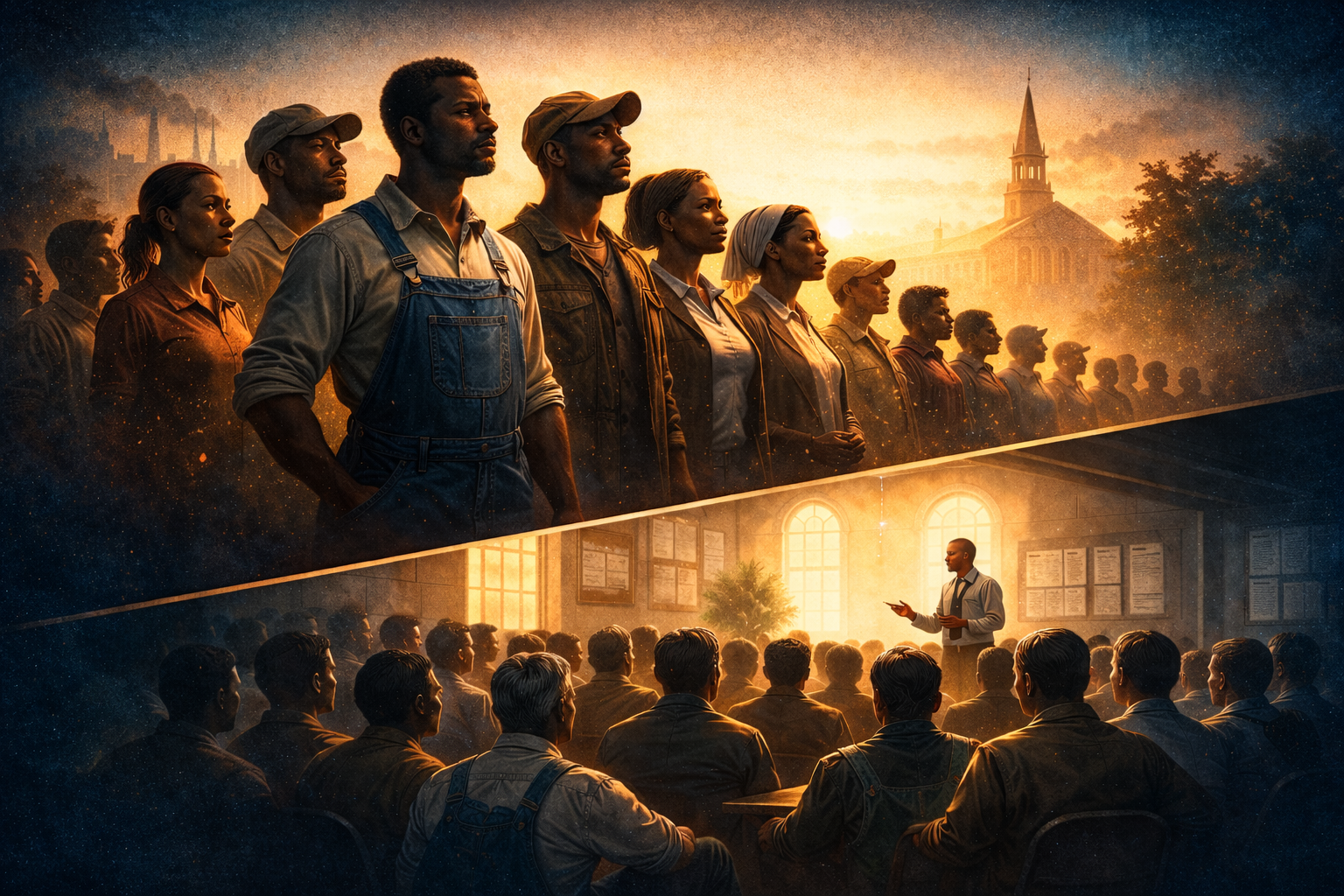
When people think about labor organizing in the United States, they often picture industrial unions of the early 20th century—factories, steel mills, and collective bargaining agreements. But long before formal unions gained legal recognition, Black communities were already organizing work, labor conditions, and economic survival.
For Black workers, labor organizing was never only about wages. It was about dignity, safety, autonomy, and survival in systems that routinely denied all four. Because racial inequality shaped nearly every aspect of work, Black labor organizing developed differently—often outside formal institutions, and often in ways that blended economic action with community protection.
Understanding these roots helps explain not only past labor movements, but many of the organizing strategies still visible today.
Long before unions were legal—or accessible—Black communities relied on collective strategies to manage work and risk.
These included:
This wasn’t always labeled “labor organizing,” but it served the same purpose: collective leverage in an unequal system.
Even under slavery, labor was not simply imposed—it was negotiated, resisted, and collectively shaped.
Enslaved people engaged in:
Because labor was central to the plantation economy, collective action—however constrained—had real impact. These practices shaped later organizing traditions built around discipline, secrecy, and mutual trust.
After emancipation, freedom brought new possibilities—and new constraints.
Black workers attempted to:
At the same time, violence, Black Codes, and criminalization sharply limited what organizing could look like. Labor organizing during this period was often met with economic retaliation, legal punishment, or physical harm.
As formal labor unions grew, many excluded Black workers entirely.
This exclusion wasn’t a failure of Black organizing—it was a structural barrier that forced Black workers to build parallel systems of labor advocacy.
Despite exclusion, Black workers organized effectively in key industries.
Notable examples include:
These efforts often combined workplace demands with broader community support, recognizing that retaliation extended beyond the job.
Black women were essential to labor organizing—often outside formal union structures.
Their leadership appeared in:
Because much of their labor was informal or undervalued, Black women often organized beyond the boundaries of recognized “workplace” activism.
For Black communities, labor organizing and civil rights organizing were never separate.
Shared tools included:
Many civil rights leaders gained experience through labor organizing, and economic demands were central to civil rights goals.
Black labor organizing evolved under conditions that shaped strategy:
These constraints encouraged organizing that emphasized community solidarity, discretion, and long-term resilience rather than formal recognition alone.
Many contemporary labor efforts reflect these traditions:
The strategies may look new, but their roots are deep.
Black labor organizing shows that worker power doesn’t begin with permission. It begins with coordination, shared risk, and community trust.
This history helps explain why labor struggles in Black communities have always linked wages to dignity, safety to justice, and work to broader freedom.
Library of Congress — African American Labor History
https://loc.gov/
National Museum of African American History & Culture
https://nmaahc.si.edu/
AFL-CIO Archives — Black Labor History
https://aflcio.org/
Equal Justice Initiative — Labor & Reconstruction
https://eji.org/