
Most people learn that slavery ended in 1865. Fewer learn what came next.
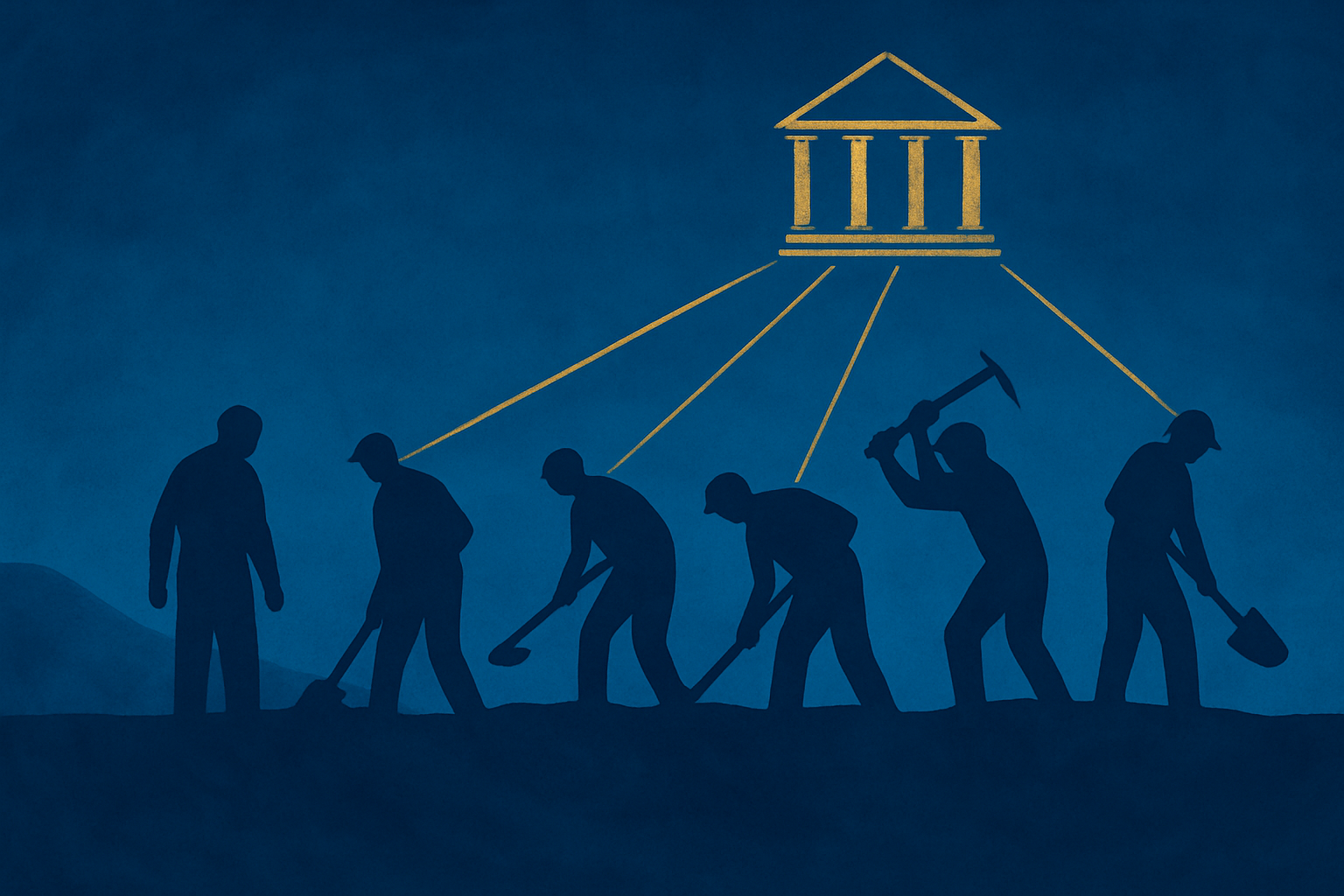
In the decades after the Civil War, Southern states created a new system to rebuild their economies, discipline labor, and maintain racial hierarchy. It was called convict leasing—a practice where people convicted of crimes were rented out to private companies for profit. States supplied the labor. Businesses supplied the demand. The workers themselves had no rights, no wages, and often no way out.
Understanding this system is essential to understanding why incarceration, labor, and economic power became so tightly linked in American history.
In simple terms:
The model was profitable, scalable, and brutal. In many camps, mortality rates were higher than they had been under slavery, because leased workers represented no long-term investment for employers.
It was a labor system built on disposability.
Convict leasing didn’t appear out of nowhere. It came from a convergence of incentives and pressures:
The amendment abolished slavery “except as punishment for a crime.” That loophole created legal ground for forced labor.
After emancipation, plantation labor collapsed. Leasing convicts allowed states to rebuild infrastructure and industry without paying workers.
Counties and states earned money from leasing, making arrests financially beneficial.
Railroads, mining companies, and large farms could expand rapidly when labor came at minimal cost.
New laws criminalized behaviors disproportionately associated with Black communities—vagrancy, loitering, unpaid fines—turning the criminal system into a labor funnel.
The mechanics were straightforward, but the consequences were far-reaching.
After emancipation, many states passed laws making it a crime to be unemployed, change jobs without permission, or owe minor debts. Enforcement targeted Black people almost exclusively.
Once convicted, people were leased to companies who assumed full control over their work and discipline.
Leased labor appeared across the South:
Long hours, shackles, corporal punishment, inadequate food, and extremely high mortality were common. Because companies paid the state, not the workers, they had no incentive to preserve workers’ lives.
While most leased convicts were Black men and boys, women and young teenagers were also swept into the system.
Convict leasing aligned economic incentives for several groups:
The winners were institutions with power. The costs fell on individuals with the least of it.
The pattern was overwhelmingly racial, but also tied to class and vulnerability.
From the 1870s into the early 20th century, Black men were incarcerated at staggering rates, often for minor offenses or manufactured charges. Convict leasing extended the economic logic of slavery under another name.
While targeted far less frequently, some poor Whites were swept in—often to discipline labor movements or fill shortages.
Immigrants in mining regions sometimes faced similar practices when arrested for debt or minor infractions.
The system concentrated where individuals had little legal support, representation, or community leverage.
Convict leasing did more than replace slavery—it reshaped labor markets for decades.
Why hire free workers when convict labor cost less?
Mines, railroads, and factories grew faster with leased labor than they could have otherwise.
Arrests filled labor shortages, turning policing into an economic tool.
As leasing declined, chain gangs, prison farms, and prison industries emerged to fill similar roles.
Different communities faced very different risks and forms of labor control.
Public scandals, investigative journalism, and political pressure eventually weakened convict leasing. But states didn’t abandon the idea of extracting labor from incarcerated people. Instead, they shifted to:
The systems changed; the logic persisted.
Convict leasing sits at the crossroads of labor, incarceration, race, and state power. Understanding it helps explain:
History doesn't repeat, but its structures often echo. Convict leasing shows how quickly punishment can become economic strategy—and how long those strategies can last.
Library of Congress — African American History Collections
https://loc.gov/
Equal Justice Initiative — Reports on Convict Leasing
https://eji.org/
National Museum of African American History & Culture — Labor and Reconstruction
https://nmaahc.si.edu/
Bureau of Labor Statistics & NBER — Historical Labor Data
https://nber.org/