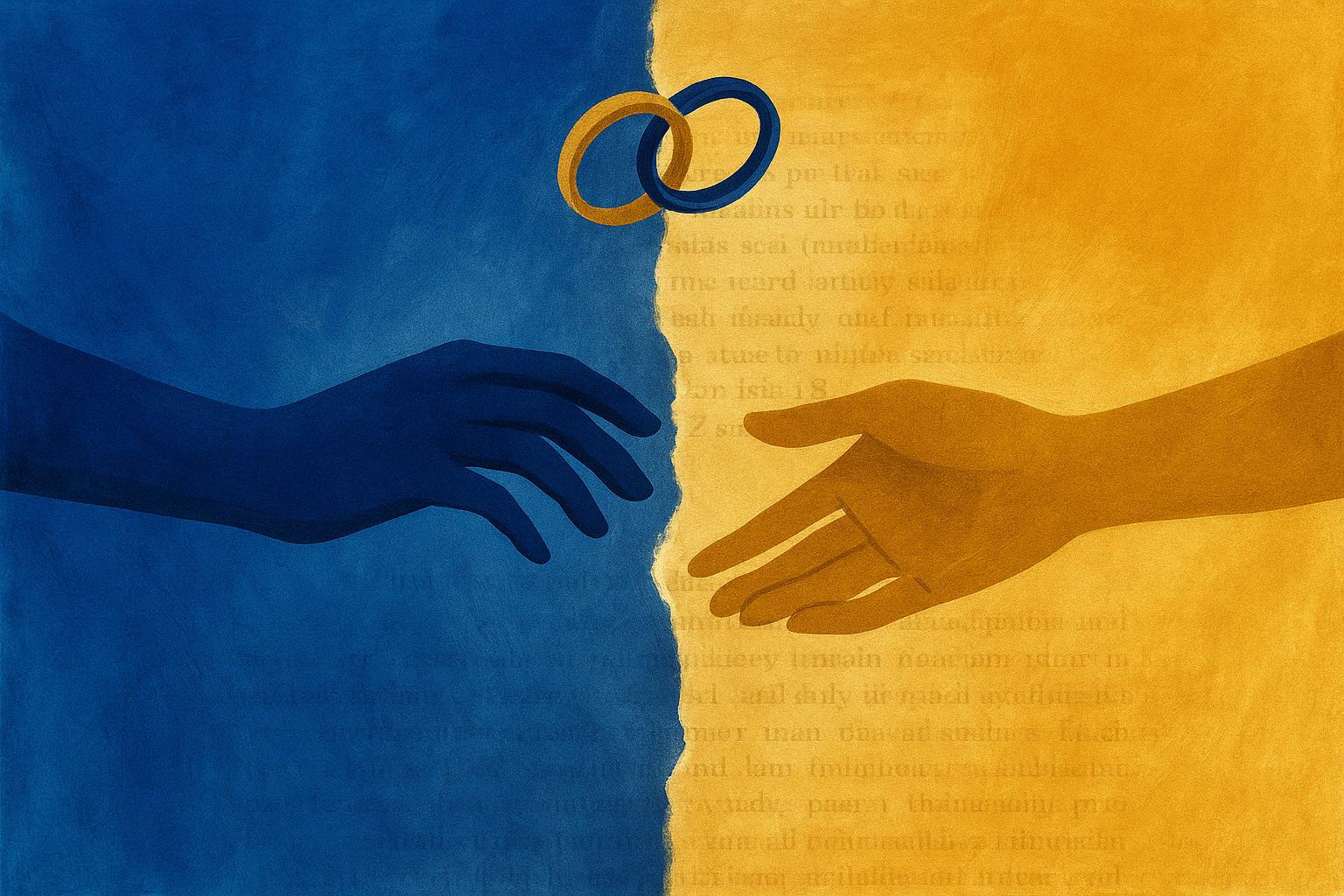
Most of us think about interracial marriage as something that was simply “controversial” in the past — something people disagreed about socially. But in America, interracial relationships weren’t just frowned upon. They were criminalized. For centuries.
These laws, called miscegenation laws, shaped families, communities, and opportunities in ways we rarely talk about. They weren’t about protecting marriage. They were about protecting a racial hierarchy — legally.
And when you see how hard the government worked to control who could marry whom, you start to understand the enormous impact these laws had on identity, citizenship, and belonging across many communities.
Miscegenation laws first appeared in the late 1600s, long before the United States existed. They banned marriages — and often relationships, cohabitation, and even private sexual contact — between people the state defined as belonging to different racial groups.
These laws:
And they weren’t isolated. They existed in 41 states at some point.
Some banned relationships between White and Black people.
Others also targeted Indigenous, Asian, or Mexican communities.
Some banned marriage if a person had any ancestry the state classified as non-white.
These weren’t social customs. These were state-level systems of surveillance and control, backed by courts, police, and state governments.
The laws were primarily designed to reinforce the racial hierarchy created under slavery and segregation. They restricted freedom to marry, form families, and build community.
Many states banned marriages between White settlers and Indigenous people, especially in areas where intermarriage challenged land claims.
Chinese, Filipino, Japanese, and South Asian immigrants were included in many bans, especially in Western states.
In the Southwest, bans often targeted Mexican Americans or blended Indigenous/Spanish ancestry communities.
In some regions, accusations about interracial relationships were used politically to punish or stigmatize poor White families.
They were especially vulnerable — their marriages invalidated, their children denied rights, or their family histories erased by legal definitions.
These laws reshaped entire family trees.
Opposition grew slowly but steadily:
Black families fought back in courts, churches, newspapers, and social networks long before the Supreme Court ever weighed in.
Asian and Latino families pushed against confusing, inconsistent laws that often reclassified them depending on politics.
Some clergy and local leaders denounced the laws as violations of religious freedom and family rights.
Court battles unfolded across the country, each chipping away at the legal foundation of these bans.
The landmark case that finally struck down interracial marriage bans nationwide.
Richard and Mildred Loving — a White man and a Black woman — were arrested in their home for being married.
Their victory was simple and profound:
“Marriage is one of the basic civil rights of man.”
But even after the ruling, the social shadow of these laws lingered — and in some places, still does.
Even though the laws were overturned in 1967, their effects still echo:
The legal bans are gone. The cultural habits they shaped took longer to fade.
Because these laws weren’t just about who could marry.
They were about who could belong, who could inherit, who counted, and whose families were legitimate in the eyes of the state.
Understanding this history helps us see:
When we recognize the design of these systems, we can understand — and change — the patterns we still live with today.
Library of Congress — Anti-Miscegenation Laws Collection
https://www.loc.gov/
National Archives — Loving v. Virginia Case Materials
https://www.archives.gov/
Smithsonian NMAAHC — Interracial Marriage History
https://nmaahc.si.edu/
PBS — The Legacy of Anti-Miscegenation Laws
https://www.pbs.org/
American Bar Association — History of Marriage Rights
https://www.americanbar.org/