When people gather in the streets to demand change, the words used to describe them matter.
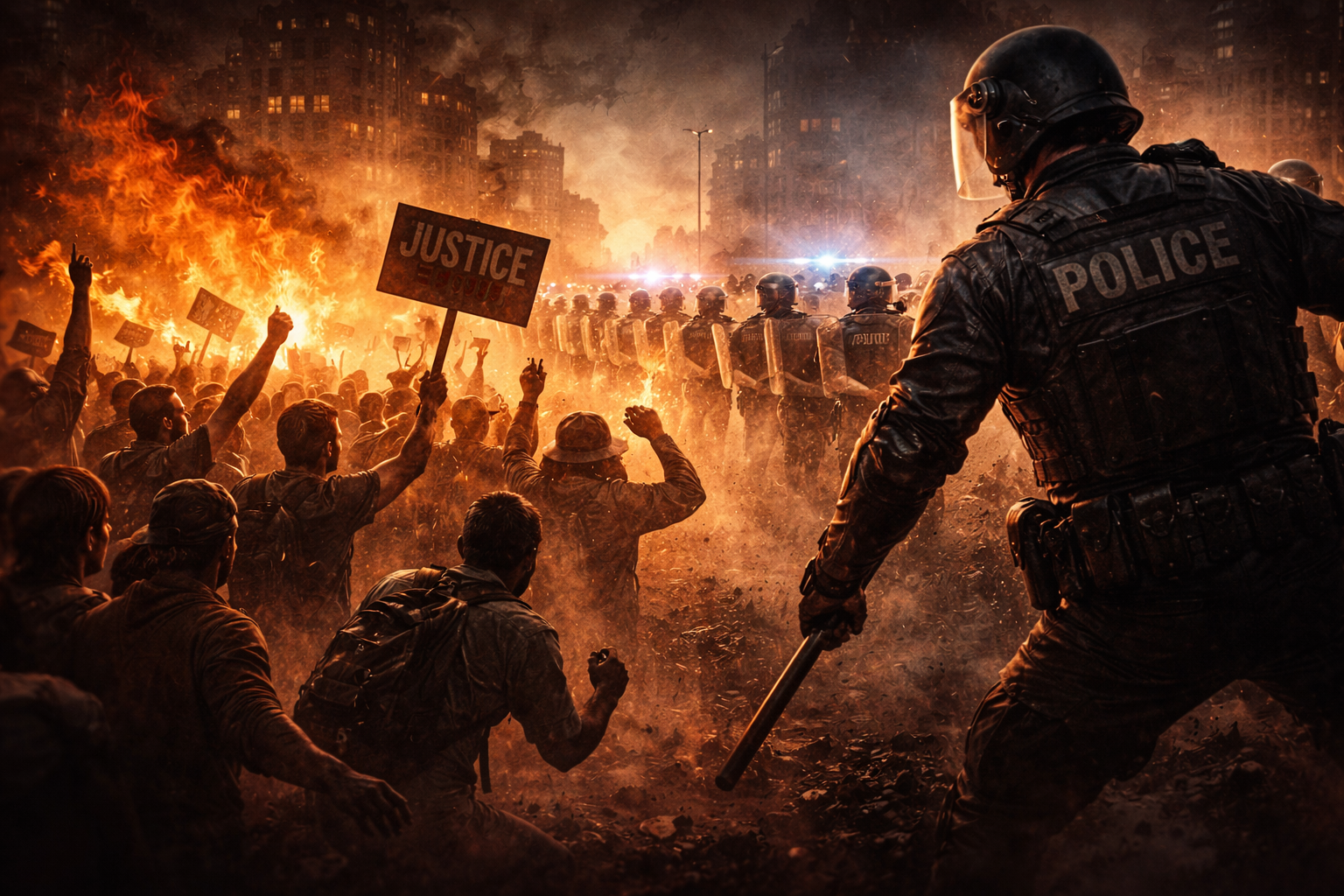
Some events are called protests. Others are labeled riots.
The distinction often feels obvious—but historically, it has rarely been neutral.
Across American history, movements that challenge power have frequently been described not by their goals, but by their disruption. The label “riot” has been used to reframe collective action as disorder, shifting public attention away from what people are demanding and toward how their presence is perceived.
Understanding how and why this language is applied helps explain patterns that repeat across eras, communities, and causes.
Public protest has always been part of American political life. From colonial resistance to labor strikes to civil rights marches, collective action has often been necessary to force issues into public view.
At the same time, governments have long treated large gatherings as potential threats. English common law defined “riot” broadly, often as any assembly that disturbed the peace or challenged authority.
This definition was flexible by design. It allowed officials to characterize dissent as disorder and justify intervention.
In early America, this framing was applied selectively. Protests aligned with dominant interests were often treated as grievances. Protests that challenged economic, racial, or political hierarchies were more likely to be labeled dangerous.
Over time, the riot label became a tool of governance.
By framing protests as riots, authorities could:
During the nineteenth and early twentieth centuries, labor movements were frequently described as riots, even when actions were organized and strategic. Newspapers emphasized property damage or clashes rather than demands for wages, safety, or rights.
The same pattern appeared during the civil rights movement. Peaceful demonstrations were often framed through the lens of disorder, especially when they disrupted daily routines or challenged segregation directly.
The language did not simply describe events—it shaped the response.
The riot label has fallen most heavily on groups already viewed as threatening to the social order.
Black communities have been especially affected. Protests against racial violence or discrimination were often described as riots regardless of scale, intent, or leadership. This framing helped justify surveillance, arrests, and military-style responses.
Immigrant and ethnic communities experienced similar treatment when organizing for labor rights or political inclusion.
Working-class movements were frequently portrayed as mobs rather than organized campaigns, undermining public sympathy and political leverage.
Other groups—such as antiwar protesters or student movements—were also affected, though the consequences varied depending on race, class, and political context.
The pattern is not about chaos. It is about whose disruption is tolerated.
Today, protest movements still encounter the riot label quickly—often before facts are established.
Several forces reinforce this pattern:
Once the label is applied, it becomes difficult to reverse. Attention shifts from grievances to control. The legitimacy of the movement is questioned, even when demands are clear and broadly supported.
The riot label shapes outcomes.
It influences:
Understanding this history helps explain why protests are often judged by their disruption rather than their purpose, and why movements seeking structural change face higher barriers to legitimacy.
It also reminds us that language is not incidental. It is part of how power responds to challenge.
Protest and Law
Media and Framing
Civil Rights and Public Order
Protest movements are often labeled riots not because of what they are, but because of what they challenge.
Every Chapter Counts examines these patterns to understand how language, law, and power interact—especially in moments when people push for change.
When we look past the label, we can better see the systems being questioned—and the reasons those questions matter.